
 On February 28, a forum themed "Mining and Game Theory: Opportunities and Challenges of Investing in Southeast Asian Countries" was successfully held in Beijing. Guided by the China Friendship Promotion Association and hosted by the Thai-China Friendship Relations Association, the event attracted over a hundred representatives from government, academia, and business to deeply discuss the investment prospects of Chinese enterprises in ASEAN countries.
With the economic transformation of the 21st century, traditional resource extraction models are gradually fading out, and demand for new energy and rare metals has surged. In response to this change, a new investment strategy combining resource cooperation, infrastructure construction, and production capacity cooperation has gradually taken shape. At the same time, resource-rich countries such as Chile and Peru have adjusted their mining policies in response to economic pressures, presenting new challenges for Chinese enterprises in overseas investment.
During the keynote speeches, Chen Jiabin analyzed in detail the impact of global geopolitics on mining investment and proposed strategies to avoid risks. Experts believe that Chinese new energy enterprises should strengthen their supply chains in overseas markets, build a healthy industrial ecosystem, and alleviate policy pressure by promoting local economic development. Long Pengyu cited the Indonesia cement project as an example to demonstrate how Chinese enterprises can succeed overseas.
In the roundtable discussion, industry experts and business leaders engaged in in-depth exchanges on how to promote international production capacity cooperation and jointly create a new high-quality benchmark for the "Belt and Road" initiative. Experts put forward several suggestions to help Chinese enterprises seize global development opportunities in the new energy vehicle industry.
Faced with the complexity of the Southeast Asian market, Chinese enterprises need to deeply understand local culture and laws, implement precise market strategies, and become long-termist enterprises with a global perspective.
On February 28, a forum themed "Mining and Game Theory: Opportunities and Challenges of Investing in Southeast Asian Countries" was successfully held in Beijing. Guided by the China Friendship Promotion Association and hosted by the Thai-China Friendship Relations Association, the event attracted over a hundred representatives from government, academia, and business to deeply discuss the investment prospects of Chinese enterprises in ASEAN countries.
With the economic transformation of the 21st century, traditional resource extraction models are gradually fading out, and demand for new energy and rare metals has surged. In response to this change, a new investment strategy combining resource cooperation, infrastructure construction, and production capacity cooperation has gradually taken shape. At the same time, resource-rich countries such as Chile and Peru have adjusted their mining policies in response to economic pressures, presenting new challenges for Chinese enterprises in overseas investment.
During the keynote speeches, Chen Jiabin analyzed in detail the impact of global geopolitics on mining investment and proposed strategies to avoid risks. Experts believe that Chinese new energy enterprises should strengthen their supply chains in overseas markets, build a healthy industrial ecosystem, and alleviate policy pressure by promoting local economic development. Long Pengyu cited the Indonesia cement project as an example to demonstrate how Chinese enterprises can succeed overseas.
In the roundtable discussion, industry experts and business leaders engaged in in-depth exchanges on how to promote international production capacity cooperation and jointly create a new high-quality benchmark for the "Belt and Road" initiative. Experts put forward several suggestions to help Chinese enterprises seize global development opportunities in the new energy vehicle industry.
Faced with the complexity of the Southeast Asian market, Chinese enterprises need to deeply understand local culture and laws, implement precise market strategies, and become long-termist enterprises with a global perspective.
中资快讯
Exploring the New Era: Opportunities and Challenges for Chinese Enterprises Investing in Southeast Asia
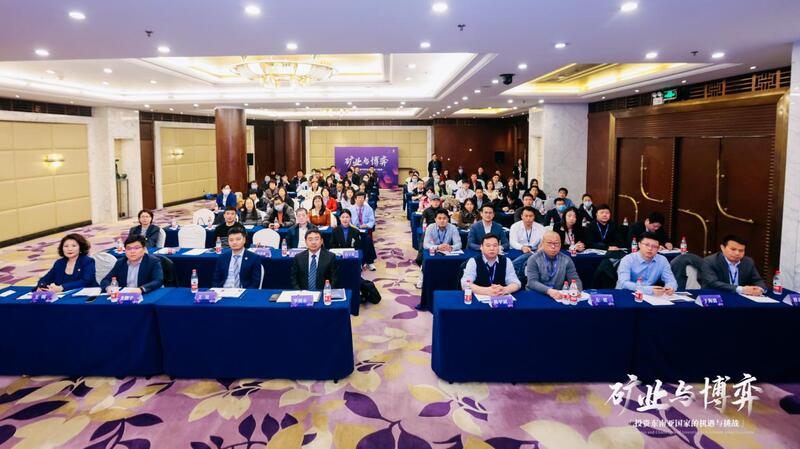
On February 28, a forum themed "Mining and Game Theory: Opportunities and Challenges of Investing in Southeast Asian Countries" was successfully held in Beijing. Guided by the China Friendship Promotion Association and hosted by the Thai-China Friendship Relations Association, the event attracted over a hundred representatives from government, academia, and business to deeply discuss the investment prospects of Chinese enterprises in ASEAN countries.
With the economic transformation of the 21st century, traditional resource extraction models are gradually fading out, and demand for new energy and rare metals has surged. In response to this change, a new investment strategy combining resource cooperation, infrastructure construction, and production capacity cooperation has gradually taken shape. At the same time, resource-rich countries such as Chile and Peru have adjusted their mining policies in response to economic pressures, presenting new challenges for Chinese enterprises in overseas investment.
During the keynote speeches, Chen Jiabin analyzed in detail the impact of global geopolitics on mining investment and proposed strategies to avoid risks. Experts believe that Chinese new energy enterprises should strengthen their supply chains in overseas markets, build a healthy industrial ecosystem, and alleviate policy pressure by promoting local economic development. Long Pengyu cited the Indonesia cement project as an example to demonstrate how Chinese enterprises can succeed overseas.
In the roundtable discussion, industry experts and business leaders engaged in in-depth exchanges on how to promote international production capacity cooperation and jointly create a new high-quality benchmark for the "Belt and Road" initiative. Experts put forward several suggestions to help Chinese enterprises seize global development opportunities in the new energy vehicle industry.
Faced with the complexity of the Southeast Asian market, Chinese enterprises need to deeply understand local culture and laws, implement precise market strategies, and become long-termist enterprises with a global perspective.