
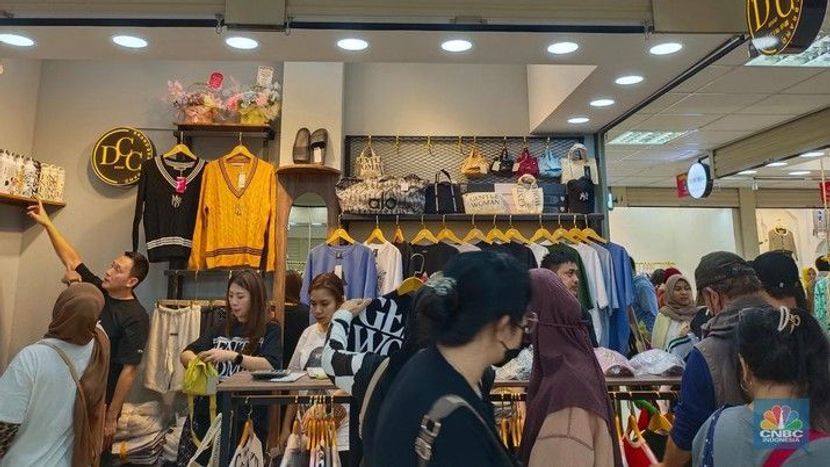
 The imported goods in the Tanah Abang market are considered dominant. According to Tanah Abang traders, it is very difficult to find several domestic products compared to imported goods. The Indonesian Textile Association (API) committee revealed that many manufacturers have closed due to the large number of imported products. This is because the import of various goods has become very rampant, squeezing the textile and textile products (TPT) industry increasingly. In 2024, the turnover of Tanah Abang will decline by 50%, with approximately 70% dominated by imported goods, especially children's clothing. Imported curtains account for 90% of goods, and there are almost no curtain manufacturers in West Java, Jakarta, and Central Java that can survive; the last one has closed.
To minimize imports, the government subsequently issued trade regulations concerning import policies and regulations. The impact of imported goods, especially clothing, will reach 50% by 2024, and 70% of textiles are controlled by imported goods. Ironically, imported goods are very easy to obtain. For this reason, major textile entrepreneurs have responded positively, supporting the government to regulate import flows through regulations. Without government assistance to the textile industry, he believes that all manufacturers will close by 2045, and when the textile industry closes, no one can survive.
The imported goods in the Tanah Abang market are considered dominant. According to Tanah Abang traders, it is very difficult to find several domestic products compared to imported goods. The Indonesian Textile Association (API) committee revealed that many manufacturers have closed due to the large number of imported products. This is because the import of various goods has become very rampant, squeezing the textile and textile products (TPT) industry increasingly. In 2024, the turnover of Tanah Abang will decline by 50%, with approximately 70% dominated by imported goods, especially children's clothing. Imported curtains account for 90% of goods, and there are almost no curtain manufacturers in West Java, Jakarta, and Central Java that can survive; the last one has closed.
To minimize imports, the government subsequently issued trade regulations concerning import policies and regulations. The impact of imported goods, especially clothing, will reach 50% by 2024, and 70% of textiles are controlled by imported goods. Ironically, imported goods are very easy to obtain. For this reason, major textile entrepreneurs have responded positively, supporting the government to regulate import flows through regulations. Without government assistance to the textile industry, he believes that all manufacturers will close by 2045, and when the textile industry closes, no one can survive.
The imported goods in the Tanah Abang market are considered dominant. According to Tanah Abang traders, it is very difficult to find several domestic products compared to imported goods. The Indonesian Textile Association (API) committee revealed that many manufacturers have closed due to the large number of imported products. This is because the import of various goods has become very rampant, squeezing the textile and textile products (TPT) industry increasingly. In 2024, the turnover of Tanah Abang will decline by 50%, with approximately 70% dominated by imported goods, especially children's clothing. Imported curtains account for 90% of goods, and there are almost no curtain manufacturers in West Java, Jakarta, and Central Java that can survive; the last one has closed.
To minimize imports, the government subsequently issued trade regulations concerning import policies and regulations. The impact of imported goods, especially clothing, will reach 50% by 2024, and 70% of textiles are controlled by imported goods. Ironically, imported goods are very easy to obtain. For this reason, major textile entrepreneurs have responded positively, supporting the government to regulate import flows through regulations. Without government assistance to the textile industry, he believes that all manufacturers will close by 2045, and when the textile industry closes, no one can survive.
The imported goods in the Tanah Abang market are considered dominant. According to Tanah Abang traders, it is very difficult to find several domestic products compared to imported goods. The Indonesian Textile Association (API) committee revealed that many manufacturers have closed due to the large number of imported products. This is because the import of various goods has become very rampant, squeezing the textile and textile products (TPT) industry increasingly. In 2024, the turnover of Tanah Abang will decline by 50%, with approximately 70% dominated by imported goods, especially children's clothing. Imported curtains account for 90% of goods, and there are almost no curtain manufacturers in West Java, Jakarta, and Central Java that can survive; the last one has closed.
To minimize imports, the government subsequently issued trade regulations concerning import policies and regulations. The impact of imported goods, especially clothing, will reach 50% by 2024, and 70% of textiles are controlled by imported goods. Ironically, imported goods are very easy to obtain. For this reason, major textile entrepreneurs have responded positively, supporting the government to regulate import flows through regulations. Without government assistance to the textile industry, he believes that all manufacturers will close by 2045, and when the textile industry closes, no one can survive.