
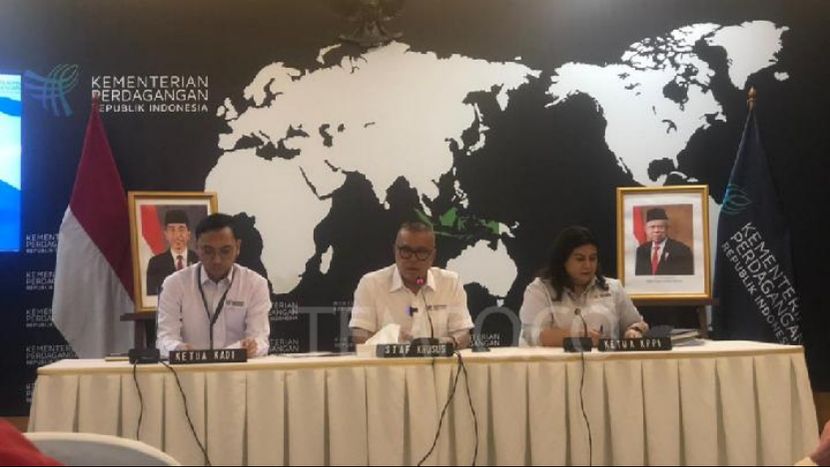
 The Special Staff of the Ministry of Trade for International Trade Agreements stated that a special task force to eliminate illegal imported goods will soon be established. The final draft regulating the work of this task force has been completed and is awaiting the signature of the Minister of Trade. He hopes this can be done within one to two days. The final draft is ready; it only needs the Minister of Trade's approval, and they can start working immediately. The task force will work to prevent unauthorized imported goods from entering the country. In addition to implementing Anti-Dumping Import Duties (BMAD) and Safeguard Import Duties (BMTP), this task force is also part of the plan to resolve disputes over illegal imports. Therefore, they have also coordinated with business organizations and relevant ministries. The Ministry of Trade has communicated with the Indonesian Chamber of Commerce and Industry (KADIN), the Indonesian Employers Association (APINDO), the Textile Association, and the Indonesian Retailers and Shopping Mall Tenants Association (HIPPINDO). Various departments are forming a special task force involving other ministries so that they can handle illegally entering goods. The proliferation of illegal imported goods in the country means that local industries cannot compete in the market, as the prices of imported goods without permits are cheaper than domestic products.
The Indonesian Chamber of Commerce and Industry (Kadin) requested that the government-formed special task force for eliminating illegal imports involve other ministries and institutions. Other parties also need to comply with the authority requirements for their import restrictions. The organization's Vice Chairman and Coordinator for Legal and Communication of the Indonesian Chamber of Commerce stated that the task force must involve the Directorate General of Customs under the Ministry of Finance to handle border matters. In the case of importing raw materials, the task force must involve the Ministry of Industry. He emphasized the importance of law enforcement in the task force's work. In this case, the task force can cooperate with the police. After the task force takes action and discovers fraud, the perpetrators must be prosecuted according to the law. He claimed that the government has concealed the discrepancy in import data between domestic and exporting countries; there is a numerical difference between these two sets of data. Therefore, the task force will monitor illegal imports in seven sectors: textiles (TPT), ready-made garments, ceramics, electronics, cosmetics, textile finished products, and footwear. Illegal imports now concern him; he found seven imported shirts sold for IDR 100,000, which is impossible considering raw material prices and the costs involved. The government must protect micro, small, and medium enterprises (MSMEs) in accordance with globally applicable rules.
The Special Staff of the Ministry of Trade for International Trade Agreements stated that a special task force to eliminate illegal imported goods will soon be established. The final draft regulating the work of this task force has been completed and is awaiting the signature of the Minister of Trade. He hopes this can be done within one to two days. The final draft is ready; it only needs the Minister of Trade's approval, and they can start working immediately. The task force will work to prevent unauthorized imported goods from entering the country. In addition to implementing Anti-Dumping Import Duties (BMAD) and Safeguard Import Duties (BMTP), this task force is also part of the plan to resolve disputes over illegal imports. Therefore, they have also coordinated with business organizations and relevant ministries. The Ministry of Trade has communicated with the Indonesian Chamber of Commerce and Industry (KADIN), the Indonesian Employers Association (APINDO), the Textile Association, and the Indonesian Retailers and Shopping Mall Tenants Association (HIPPINDO). Various departments are forming a special task force involving other ministries so that they can handle illegally entering goods. The proliferation of illegal imported goods in the country means that local industries cannot compete in the market, as the prices of imported goods without permits are cheaper than domestic products.
The Indonesian Chamber of Commerce and Industry (Kadin) requested that the government-formed special task force for eliminating illegal imports involve other ministries and institutions. Other parties also need to comply with the authority requirements for their import restrictions. The organization's Vice Chairman and Coordinator for Legal and Communication of the Indonesian Chamber of Commerce stated that the task force must involve the Directorate General of Customs under the Ministry of Finance to handle border matters. In the case of importing raw materials, the task force must involve the Ministry of Industry. He emphasized the importance of law enforcement in the task force's work. In this case, the task force can cooperate with the police. After the task force takes action and discovers fraud, the perpetrators must be prosecuted according to the law. He claimed that the government has concealed the discrepancy in import data between domestic and exporting countries; there is a numerical difference between these two sets of data. Therefore, the task force will monitor illegal imports in seven sectors: textiles (TPT), ready-made garments, ceramics, electronics, cosmetics, textile finished products, and footwear. Illegal imports now concern him; he found seven imported shirts sold for IDR 100,000, which is impossible considering raw material prices and the costs involved. The government must protect micro, small, and medium enterprises (MSMEs) in accordance with globally applicable rules.
社会动态
Indonesia's Ministry of Trade Joint Task Force Focuses on Cracking Down on Seven Categories of Illegal Imported Goods
The Special Staff of the Ministry of Trade for International Trade Agreements stated that a special task force to eliminate illegal imported goods will soon be established. The final draft regulating the work of this task force has been completed and is awaiting the signature of the Minister of Trade. He hopes this can be done within one to two days. The final draft is ready; it only needs the Minister of Trade's approval, and they can start working immediately. The task force will work to prevent unauthorized imported goods from entering the country. In addition to implementing Anti-Dumping Import Duties (BMAD) and Safeguard Import Duties (BMTP), this task force is also part of the plan to resolve disputes over illegal imports. Therefore, they have also coordinated with business organizations and relevant ministries. The Ministry of Trade has communicated with the Indonesian Chamber of Commerce and Industry (KADIN), the Indonesian Employers Association (APINDO), the Textile Association, and the Indonesian Retailers and Shopping Mall Tenants Association (HIPPINDO). Various departments are forming a special task force involving other ministries so that they can handle illegally entering goods. The proliferation of illegal imported goods in the country means that local industries cannot compete in the market, as the prices of imported goods without permits are cheaper than domestic products.
The Indonesian Chamber of Commerce and Industry (Kadin) requested that the government-formed special task force for eliminating illegal imports involve other ministries and institutions. Other parties also need to comply with the authority requirements for their import restrictions. The organization's Vice Chairman and Coordinator for Legal and Communication of the Indonesian Chamber of Commerce stated that the task force must involve the Directorate General of Customs under the Ministry of Finance to handle border matters. In the case of importing raw materials, the task force must involve the Ministry of Industry. He emphasized the importance of law enforcement in the task force's work. In this case, the task force can cooperate with the police. After the task force takes action and discovers fraud, the perpetrators must be prosecuted according to the law. He claimed that the government has concealed the discrepancy in import data between domestic and exporting countries; there is a numerical difference between these two sets of data. Therefore, the task force will monitor illegal imports in seven sectors: textiles (TPT), ready-made garments, ceramics, electronics, cosmetics, textile finished products, and footwear. Illegal imports now concern him; he found seven imported shirts sold for IDR 100,000, which is impossible considering raw material prices and the costs involved. The government must protect micro, small, and medium enterprises (MSMEs) in accordance with globally applicable rules.