
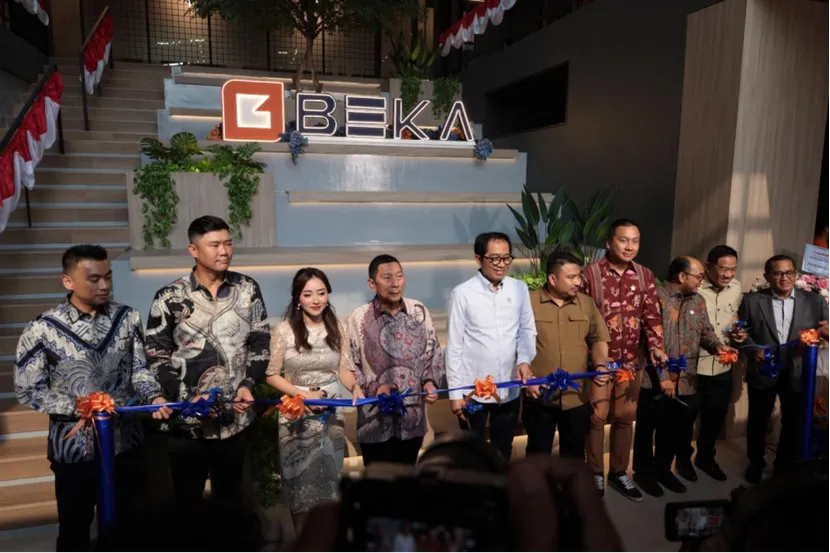
 The Indonesian Vice Minister of Industry recently attended and officiated the inauguration of the galvanized steel wire factory of Beka Indonesia Wire Company (Beva Group) in Subang Regency, West Java Province. The completion of this project becomes an important signal of the recovery of investment in Indonesia's basic metal industry amid challenging global economic conditions. The Vice Minister expressed appreciation and congratulations to the company for its investment, stating that the new factory will help enhance the level of self-sufficiency in Indonesia's domestic steel industry, particularly by strengthening production capacity for steel wire products, improving the industrial chain structure of the construction and downstream sectors, while creating a large number of new jobs for local residents.
Official data shows that manufacturing remains the core pillar of Indonesia's national economy. In the first quarter of 2026, Indonesia's manufacturing sector grew by 5.04% year-on-year, higher than 4.55% in the same period last year; manufacturing contributed 19.07% to the gross domestic product, equivalent to an economic scale of over IDR 1,179 trillion.
At the beginning of 2026, manufacturing realized investments reached IDR 182.04 trillion, accounting for 36.49% of total national investment; as of February, it absorbed over 20 million workers, contributing 83.61% of the country's total exports, demonstrating a strong economic driving force. Indonesia's steel and steel wire industry still has room for capacity improvement and competitiveness growth. Currently, there are approximately 21 relevant producers nationwide, with a total annual production capacity of 1 million tons, covering galvanized steel wire and various downstream derivative products.
The Beka Indonesia Wire project involves an investment of approximately IDR 300 billion, with potential expansion to IDR 500 billion. The factory has an annual production capacity of 36,000 tons and plans to export 40% of its products to overseas markets in Asia, Latin America, Europe, and Australia.
The government also acknowledges existing challenges in the industry. In recent years, steel and steel wire products have experienced a decline in exports and increase in imports, weakening the competitiveness of local industries and further widening the trade deficit in this sector.
To address this, the Ministry of Industry has continuously launched a series of strategic policies, including strict control over imports of similar products, implementation of national standards, optimization of industrial structure, and expansion of the usage rate of domestic industrial products among other measures, to protect and support the development of the domestic metal manufacturing industry. Officials stated that through government-industry collaboration, Indonesia will further consolidate its industrial position in the global metal supply chain. This new factory is also positioned as a catalyst for the transformation and upgrading of Indonesia's metal industry, driving the sector toward self-reliance, international competitiveness, and sustainable development, thereby supporting national industrial economic growth and improving the well-being of local communities.
The Indonesian Vice Minister of Industry recently attended and officiated the inauguration of the galvanized steel wire factory of Beka Indonesia Wire Company (Beva Group) in Subang Regency, West Java Province. The completion of this project becomes an important signal of the recovery of investment in Indonesia's basic metal industry amid challenging global economic conditions. The Vice Minister expressed appreciation and congratulations to the company for its investment, stating that the new factory will help enhance the level of self-sufficiency in Indonesia's domestic steel industry, particularly by strengthening production capacity for steel wire products, improving the industrial chain structure of the construction and downstream sectors, while creating a large number of new jobs for local residents.
Official data shows that manufacturing remains the core pillar of Indonesia's national economy. In the first quarter of 2026, Indonesia's manufacturing sector grew by 5.04% year-on-year, higher than 4.55% in the same period last year; manufacturing contributed 19.07% to the gross domestic product, equivalent to an economic scale of over IDR 1,179 trillion.
At the beginning of 2026, manufacturing realized investments reached IDR 182.04 trillion, accounting for 36.49% of total national investment; as of February, it absorbed over 20 million workers, contributing 83.61% of the country's total exports, demonstrating a strong economic driving force. Indonesia's steel and steel wire industry still has room for capacity improvement and competitiveness growth. Currently, there are approximately 21 relevant producers nationwide, with a total annual production capacity of 1 million tons, covering galvanized steel wire and various downstream derivative products.
The Beka Indonesia Wire project involves an investment of approximately IDR 300 billion, with potential expansion to IDR 500 billion. The factory has an annual production capacity of 36,000 tons and plans to export 40% of its products to overseas markets in Asia, Latin America, Europe, and Australia.
The government also acknowledges existing challenges in the industry. In recent years, steel and steel wire products have experienced a decline in exports and increase in imports, weakening the competitiveness of local industries and further widening the trade deficit in this sector.
To address this, the Ministry of Industry has continuously launched a series of strategic policies, including strict control over imports of similar products, implementation of national standards, optimization of industrial structure, and expansion of the usage rate of domestic industrial products among other measures, to protect and support the development of the domestic metal manufacturing industry. Officials stated that through government-industry collaboration, Indonesia will further consolidate its industrial position in the global metal supply chain. This new factory is also positioned as a catalyst for the transformation and upgrading of Indonesia's metal industry, driving the sector toward self-reliance, international competitiveness, and sustainable development, thereby supporting national industrial economic growth and improving the well-being of local communities.
The Indonesian Vice Minister of Industry recently attended and officiated the inauguration of the galvanized steel wire factory of Beka Indonesia Wire Company (Beva Group) in Subang Regency, West Java Province. The completion of this project becomes an important signal of the recovery of investment in Indonesia's basic metal industry amid challenging global economic conditions. The Vice Minister expressed appreciation and congratulations to the company for its investment, stating that the new factory will help enhance the level of self-sufficiency in Indonesia's domestic steel industry, particularly by strengthening production capacity for steel wire products, improving the industrial chain structure of the construction and downstream sectors, while creating a large number of new jobs for local residents.
Official data shows that manufacturing remains the core pillar of Indonesia's national economy. In the first quarter of 2026, Indonesia's manufacturing sector grew by 5.04% year-on-year, higher than 4.55% in the same period last year; manufacturing contributed 19.07% to the gross domestic product, equivalent to an economic scale of over IDR 1,179 trillion.
At the beginning of 2026, manufacturing realized investments reached IDR 182.04 trillion, accounting for 36.49% of total national investment; as of February, it absorbed over 20 million workers, contributing 83.61% of the country's total exports, demonstrating a strong economic driving force. Indonesia's steel and steel wire industry still has room for capacity improvement and competitiveness growth. Currently, there are approximately 21 relevant producers nationwide, with a total annual production capacity of 1 million tons, covering galvanized steel wire and various downstream derivative products.
The Beka Indonesia Wire project involves an investment of approximately IDR 300 billion, with potential expansion to IDR 500 billion. The factory has an annual production capacity of 36,000 tons and plans to export 40% of its products to overseas markets in Asia, Latin America, Europe, and Australia.
The government also acknowledges existing challenges in the industry. In recent years, steel and steel wire products have experienced a decline in exports and increase in imports, weakening the competitiveness of local industries and further widening the trade deficit in this sector.
To address this, the Ministry of Industry has continuously launched a series of strategic policies, including strict control over imports of similar products, implementation of national standards, optimization of industrial structure, and expansion of the usage rate of domestic industrial products among other measures, to protect and support the development of the domestic metal manufacturing industry. Officials stated that through government-industry collaboration, Indonesia will further consolidate its industrial position in the global metal supply chain. This new factory is also positioned as a catalyst for the transformation and upgrading of Indonesia's metal industry, driving the sector toward self-reliance, international competitiveness, and sustainable development, thereby supporting national industrial economic growth and improving the well-being of local communities.
The Indonesian Vice Minister of Industry recently attended and officiated the inauguration of the galvanized steel wire factory of Beka Indonesia Wire Company (Beva Group) in Subang Regency, West Java Province. The completion of this project becomes an important signal of the recovery of investment in Indonesia's basic metal industry amid challenging global economic conditions. The Vice Minister expressed appreciation and congratulations to the company for its investment, stating that the new factory will help enhance the level of self-sufficiency in Indonesia's domestic steel industry, particularly by strengthening production capacity for steel wire products, improving the industrial chain structure of the construction and downstream sectors, while creating a large number of new jobs for local residents.
Official data shows that manufacturing remains the core pillar of Indonesia's national economy. In the first quarter of 2026, Indonesia's manufacturing sector grew by 5.04% year-on-year, higher than 4.55% in the same period last year; manufacturing contributed 19.07% to the gross domestic product, equivalent to an economic scale of over IDR 1,179 trillion.
At the beginning of 2026, manufacturing realized investments reached IDR 182.04 trillion, accounting for 36.49% of total national investment; as of February, it absorbed over 20 million workers, contributing 83.61% of the country's total exports, demonstrating a strong economic driving force. Indonesia's steel and steel wire industry still has room for capacity improvement and competitiveness growth. Currently, there are approximately 21 relevant producers nationwide, with a total annual production capacity of 1 million tons, covering galvanized steel wire and various downstream derivative products.
The Beka Indonesia Wire project involves an investment of approximately IDR 300 billion, with potential expansion to IDR 500 billion. The factory has an annual production capacity of 36,000 tons and plans to export 40% of its products to overseas markets in Asia, Latin America, Europe, and Australia.
The government also acknowledges existing challenges in the industry. In recent years, steel and steel wire products have experienced a decline in exports and increase in imports, weakening the competitiveness of local industries and further widening the trade deficit in this sector.
To address this, the Ministry of Industry has continuously launched a series of strategic policies, including strict control over imports of similar products, implementation of national standards, optimization of industrial structure, and expansion of the usage rate of domestic industrial products among other measures, to protect and support the development of the domestic metal manufacturing industry. Officials stated that through government-industry collaboration, Indonesia will further consolidate its industrial position in the global metal supply chain. This new factory is also positioned as a catalyst for the transformation and upgrading of Indonesia's metal industry, driving the sector toward self-reliance, international competitiveness, and sustainable development, thereby supporting national industrial economic growth and improving the well-being of local communities.