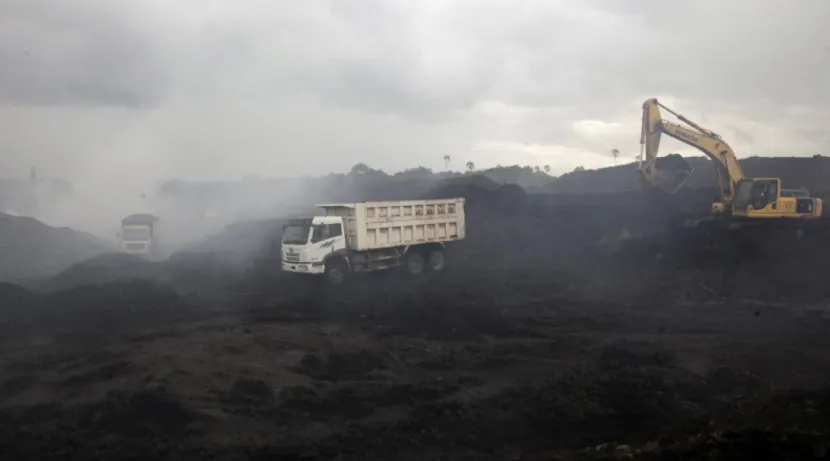

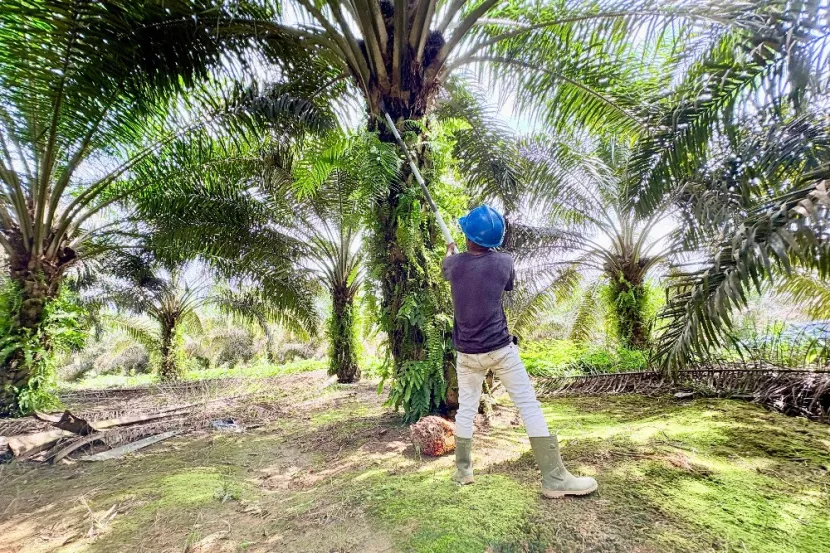
 Indonesia's Minister of Finance recently disclosed after a closed-door meeting at the Presidential Palace that authorities have verified multiple large enterprises engaged in irregular operations of under-declaring cargo values in crude palm oil and coal export businesses. Currently, the National Audit Board for Financial Construction and the Attorney General's Office have initiated investigations, and relevant work is progressing in an orderly manner. The Ministry of Finance will receive the case progress report next week. Based on the verification of shipping documents and cross-border trade data, evidence of export price fraud is conclusive.
He stated bluntly that the term 'under-declaration' may sound professional, but it is essentially fraudulent overstatement of export amounts. Companies commonly use a related-party transit model to profit: establishing their own trading agencies in Singapore, first selling local goods to overseas related entities at low prices, and then the transit enterprises resell them at several times the price to the final consumer countries. Investigations have found price differences up to four times the original price.
This special verification covers more than fifteen related enterprises, among which ten leading palm oil export companies were found with irregular clues. To uncover the true transaction chain, staff conducted ship-by-ship verification of cargo vessel information, precisely tracking the entire logistics process. Due to investigation needs, the authorities temporarily withhold the specific names of the involved enterprises.
Previously, customs supervision had loopholes, only recording goods shipped to transit countries like Singapore, making it impossible to monitor subsequent transaction chains, which allowed irregularities to go undetected for a long time. Now, Indonesia has introduced artificial intelligence technology and purchased complete cross-border trade databases, enabling ship-by-ship comparison of domestic export data with destination country import records, significantly improving the ability to identify abnormal transactions.
This irregularity is not limited to a single industry; besides the palm oil sector, the coal industry has also been found with similar signs of irregularities, which will be further reviewed and handled jointly with audit agencies. Such violations directly cause loss of national tax revenue and export foreign exchange income, and are a key focus of the Indonesian President's corrective efforts.
Regarding this incident, the Indonesian government has clearly stated that it will not shut down the business operations of involved enterprises, and the core goal of the corrective actions is to urge enterprises to comply with regulations and rectify improper trade practices.
At the same time, the authorities hope that after the establishment of the Dantara State-Owned Resource Monopoly Company, it will rely on a unified export mechanism to compress price manipulation space, reduce under-declaration irregularities at the institutional level, regulate the export order of strategic bulk commodities, and effectively protect the country's legitimate trade revenues.
Indonesia's Minister of Finance recently disclosed after a closed-door meeting at the Presidential Palace that authorities have verified multiple large enterprises engaged in irregular operations of under-declaring cargo values in crude palm oil and coal export businesses. Currently, the National Audit Board for Financial Construction and the Attorney General's Office have initiated investigations, and relevant work is progressing in an orderly manner. The Ministry of Finance will receive the case progress report next week. Based on the verification of shipping documents and cross-border trade data, evidence of export price fraud is conclusive.
He stated bluntly that the term 'under-declaration' may sound professional, but it is essentially fraudulent overstatement of export amounts. Companies commonly use a related-party transit model to profit: establishing their own trading agencies in Singapore, first selling local goods to overseas related entities at low prices, and then the transit enterprises resell them at several times the price to the final consumer countries. Investigations have found price differences up to four times the original price.
This special verification covers more than fifteen related enterprises, among which ten leading palm oil export companies were found with irregular clues. To uncover the true transaction chain, staff conducted ship-by-ship verification of cargo vessel information, precisely tracking the entire logistics process. Due to investigation needs, the authorities temporarily withhold the specific names of the involved enterprises.
Previously, customs supervision had loopholes, only recording goods shipped to transit countries like Singapore, making it impossible to monitor subsequent transaction chains, which allowed irregularities to go undetected for a long time. Now, Indonesia has introduced artificial intelligence technology and purchased complete cross-border trade databases, enabling ship-by-ship comparison of domestic export data with destination country import records, significantly improving the ability to identify abnormal transactions.
This irregularity is not limited to a single industry; besides the palm oil sector, the coal industry has also been found with similar signs of irregularities, which will be further reviewed and handled jointly with audit agencies. Such violations directly cause loss of national tax revenue and export foreign exchange income, and are a key focus of the Indonesian President's corrective efforts.
Regarding this incident, the Indonesian government has clearly stated that it will not shut down the business operations of involved enterprises, and the core goal of the corrective actions is to urge enterprises to comply with regulations and rectify improper trade practices.
At the same time, the authorities hope that after the establishment of the Dantara State-Owned Resource Monopoly Company, it will rely on a unified export mechanism to compress price manipulation space, reduce under-declaration irregularities at the institutional level, regulate the export order of strategic bulk commodities, and effectively protect the country's legitimate trade revenues.
Indonesia's Minister of Finance recently disclosed after a closed-door meeting at the Presidential Palace that authorities have verified multiple large enterprises engaged in irregular operations of under-declaring cargo values in crude palm oil and coal export businesses. Currently, the National Audit Board for Financial Construction and the Attorney General's Office have initiated investigations, and relevant work is progressing in an orderly manner. The Ministry of Finance will receive the case progress report next week. Based on the verification of shipping documents and cross-border trade data, evidence of export price fraud is conclusive.
He stated bluntly that the term 'under-declaration' may sound professional, but it is essentially fraudulent overstatement of export amounts. Companies commonly use a related-party transit model to profit: establishing their own trading agencies in Singapore, first selling local goods to overseas related entities at low prices, and then the transit enterprises resell them at several times the price to the final consumer countries. Investigations have found price differences up to four times the original price.
This special verification covers more than fifteen related enterprises, among which ten leading palm oil export companies were found with irregular clues. To uncover the true transaction chain, staff conducted ship-by-ship verification of cargo vessel information, precisely tracking the entire logistics process. Due to investigation needs, the authorities temporarily withhold the specific names of the involved enterprises.
Previously, customs supervision had loopholes, only recording goods shipped to transit countries like Singapore, making it impossible to monitor subsequent transaction chains, which allowed irregularities to go undetected for a long time. Now, Indonesia has introduced artificial intelligence technology and purchased complete cross-border trade databases, enabling ship-by-ship comparison of domestic export data with destination country import records, significantly improving the ability to identify abnormal transactions.
This irregularity is not limited to a single industry; besides the palm oil sector, the coal industry has also been found with similar signs of irregularities, which will be further reviewed and handled jointly with audit agencies. Such violations directly cause loss of national tax revenue and export foreign exchange income, and are a key focus of the Indonesian President's corrective efforts.
Regarding this incident, the Indonesian government has clearly stated that it will not shut down the business operations of involved enterprises, and the core goal of the corrective actions is to urge enterprises to comply with regulations and rectify improper trade practices.
At the same time, the authorities hope that after the establishment of the Dantara State-Owned Resource Monopoly Company, it will rely on a unified export mechanism to compress price manipulation space, reduce under-declaration irregularities at the institutional level, regulate the export order of strategic bulk commodities, and effectively protect the country's legitimate trade revenues.
Indonesia's Minister of Finance recently disclosed after a closed-door meeting at the Presidential Palace that authorities have verified multiple large enterprises engaged in irregular operations of under-declaring cargo values in crude palm oil and coal export businesses. Currently, the National Audit Board for Financial Construction and the Attorney General's Office have initiated investigations, and relevant work is progressing in an orderly manner. The Ministry of Finance will receive the case progress report next week. Based on the verification of shipping documents and cross-border trade data, evidence of export price fraud is conclusive.
He stated bluntly that the term 'under-declaration' may sound professional, but it is essentially fraudulent overstatement of export amounts. Companies commonly use a related-party transit model to profit: establishing their own trading agencies in Singapore, first selling local goods to overseas related entities at low prices, and then the transit enterprises resell them at several times the price to the final consumer countries. Investigations have found price differences up to four times the original price.
This special verification covers more than fifteen related enterprises, among which ten leading palm oil export companies were found with irregular clues. To uncover the true transaction chain, staff conducted ship-by-ship verification of cargo vessel information, precisely tracking the entire logistics process. Due to investigation needs, the authorities temporarily withhold the specific names of the involved enterprises.
Previously, customs supervision had loopholes, only recording goods shipped to transit countries like Singapore, making it impossible to monitor subsequent transaction chains, which allowed irregularities to go undetected for a long time. Now, Indonesia has introduced artificial intelligence technology and purchased complete cross-border trade databases, enabling ship-by-ship comparison of domestic export data with destination country import records, significantly improving the ability to identify abnormal transactions.
This irregularity is not limited to a single industry; besides the palm oil sector, the coal industry has also been found with similar signs of irregularities, which will be further reviewed and handled jointly with audit agencies. Such violations directly cause loss of national tax revenue and export foreign exchange income, and are a key focus of the Indonesian President's corrective efforts.
Regarding this incident, the Indonesian government has clearly stated that it will not shut down the business operations of involved enterprises, and the core goal of the corrective actions is to urge enterprises to comply with regulations and rectify improper trade practices.
At the same time, the authorities hope that after the establishment of the Dantara State-Owned Resource Monopoly Company, it will rely on a unified export mechanism to compress price manipulation space, reduce under-declaration irregularities at the institutional level, regulate the export order of strategic bulk commodities, and effectively protect the country's legitimate trade revenues.