
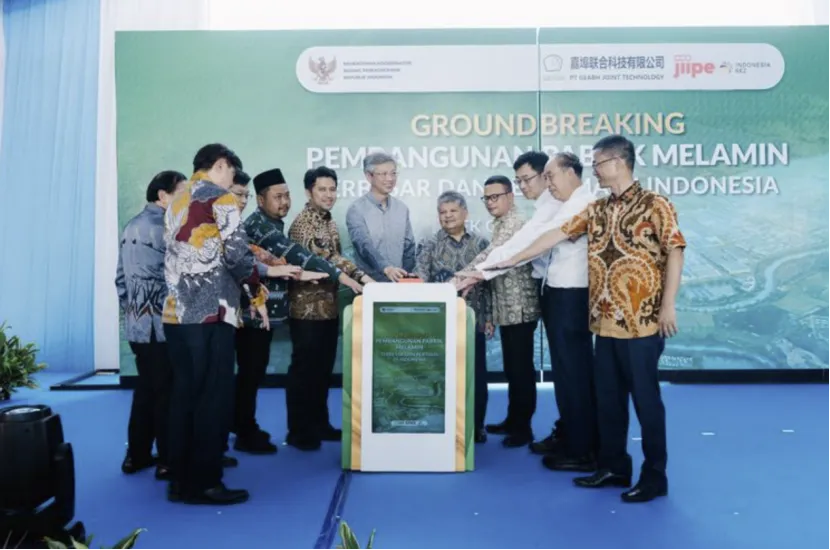
 The project to build a melamine plant in the Gresik JIIPE Integrated Industrial and Port Special Economic Zone is considered to significantly strengthen Indonesia's national chemical industry structure and promote the development of local low-carbon emission industries. The project is developed by Golden Elephant Group (GEABH), with a total investment of approximately USD 600 million, equivalent to around IDR 10.25 trillion. Once completed, it will become one of the world's largest melamine production facilities, adopting an integrated whole industry chain design from upstream to downstream, using natural gas as raw material to sequentially produce ammonia, urea, and finally melamine. The Coordinating Minister for Economic Affairs stated in an official statement that the project is an important part of Indonesia's national strategy to enhance the added value of local resources and strengthen industrial competitiveness.
He pointed out that developing the melamine industry in Gresik is a strategic move to strengthen the downstream industrial chain and also expressed appreciation for the role of the JIIPE Special Economic Zone in building an integrated industrial ecosystem and attracting large-scale, high-quality investment. The project is highly aligned with the Indonesian government's direction of strengthening the resource-based industrial base and promoting the transition of industries towards efficiency and sustainability. The Chairman of Golden Elephant Group stated that the project adopts new-generation process technology and circular economy chemical models, and the JIIPE park provides a strategic platform for building an integrated chemical industry chain. The project will not only strengthen Indonesia's domestic industrial supply capacity but also promote technology transfer and cross-border industrial cooperation. This advanced technology can achieve approximately 30% energy savings compared to global industry standards, and through circular utilization of by-products, strongly supports the development of a low-carbon chemical industry.
The General Manager of PT BKMS, the operator of the JIIPE park, stated that the park has comprehensive supporting advantages from raw material supply, infrastructure, to logistics connectivity, which can significantly improve operational efficiency and industrial sustainable competitiveness. Chinese Ambassador to Indonesia Wang Lutong commented that the project will enhance the resilience of Indonesia's chemical industry chain and become an important milestone in bilateral economic cooperation, ensuring the supply of strategic chemical products for Indonesia, supporting its industrialization process, and making positive contributions to regional economic growth.
Leveraging the advantages of integrated infrastructure such as deep-water ports and special economic zone policies, the JIIPE park holds a significant strategic position in developing high-efficiency, high-value-added, and sustainable industries. The project is expected to create over 1,000 jobs and drive the improvement of upstream and downstream industrial ecosystems, covering multiple fields such as agriculture, manufacturing, and logistics, injecting strong momentum into Indonesia's industrial structure upgrade and regional economic development.
The project to build a melamine plant in the Gresik JIIPE Integrated Industrial and Port Special Economic Zone is considered to significantly strengthen Indonesia's national chemical industry structure and promote the development of local low-carbon emission industries. The project is developed by Golden Elephant Group (GEABH), with a total investment of approximately USD 600 million, equivalent to around IDR 10.25 trillion. Once completed, it will become one of the world's largest melamine production facilities, adopting an integrated whole industry chain design from upstream to downstream, using natural gas as raw material to sequentially produce ammonia, urea, and finally melamine. The Coordinating Minister for Economic Affairs stated in an official statement that the project is an important part of Indonesia's national strategy to enhance the added value of local resources and strengthen industrial competitiveness.
He pointed out that developing the melamine industry in Gresik is a strategic move to strengthen the downstream industrial chain and also expressed appreciation for the role of the JIIPE Special Economic Zone in building an integrated industrial ecosystem and attracting large-scale, high-quality investment. The project is highly aligned with the Indonesian government's direction of strengthening the resource-based industrial base and promoting the transition of industries towards efficiency and sustainability. The Chairman of Golden Elephant Group stated that the project adopts new-generation process technology and circular economy chemical models, and the JIIPE park provides a strategic platform for building an integrated chemical industry chain. The project will not only strengthen Indonesia's domestic industrial supply capacity but also promote technology transfer and cross-border industrial cooperation. This advanced technology can achieve approximately 30% energy savings compared to global industry standards, and through circular utilization of by-products, strongly supports the development of a low-carbon chemical industry.
The General Manager of PT BKMS, the operator of the JIIPE park, stated that the park has comprehensive supporting advantages from raw material supply, infrastructure, to logistics connectivity, which can significantly improve operational efficiency and industrial sustainable competitiveness. Chinese Ambassador to Indonesia Wang Lutong commented that the project will enhance the resilience of Indonesia's chemical industry chain and become an important milestone in bilateral economic cooperation, ensuring the supply of strategic chemical products for Indonesia, supporting its industrialization process, and making positive contributions to regional economic growth.
Leveraging the advantages of integrated infrastructure such as deep-water ports and special economic zone policies, the JIIPE park holds a significant strategic position in developing high-efficiency, high-value-added, and sustainable industries. The project is expected to create over 1,000 jobs and drive the improvement of upstream and downstream industrial ecosystems, covering multiple fields such as agriculture, manufacturing, and logistics, injecting strong momentum into Indonesia's industrial structure upgrade and regional economic development.
The project to build a melamine plant in the Gresik JIIPE Integrated Industrial and Port Special Economic Zone is considered to significantly strengthen Indonesia's national chemical industry structure and promote the development of local low-carbon emission industries. The project is developed by Golden Elephant Group (GEABH), with a total investment of approximately USD 600 million, equivalent to around IDR 10.25 trillion. Once completed, it will become one of the world's largest melamine production facilities, adopting an integrated whole industry chain design from upstream to downstream, using natural gas as raw material to sequentially produce ammonia, urea, and finally melamine. The Coordinating Minister for Economic Affairs stated in an official statement that the project is an important part of Indonesia's national strategy to enhance the added value of local resources and strengthen industrial competitiveness.
He pointed out that developing the melamine industry in Gresik is a strategic move to strengthen the downstream industrial chain and also expressed appreciation for the role of the JIIPE Special Economic Zone in building an integrated industrial ecosystem and attracting large-scale, high-quality investment. The project is highly aligned with the Indonesian government's direction of strengthening the resource-based industrial base and promoting the transition of industries towards efficiency and sustainability. The Chairman of Golden Elephant Group stated that the project adopts new-generation process technology and circular economy chemical models, and the JIIPE park provides a strategic platform for building an integrated chemical industry chain. The project will not only strengthen Indonesia's domestic industrial supply capacity but also promote technology transfer and cross-border industrial cooperation. This advanced technology can achieve approximately 30% energy savings compared to global industry standards, and through circular utilization of by-products, strongly supports the development of a low-carbon chemical industry.
The General Manager of PT BKMS, the operator of the JIIPE park, stated that the park has comprehensive supporting advantages from raw material supply, infrastructure, to logistics connectivity, which can significantly improve operational efficiency and industrial sustainable competitiveness. Chinese Ambassador to Indonesia Wang Lutong commented that the project will enhance the resilience of Indonesia's chemical industry chain and become an important milestone in bilateral economic cooperation, ensuring the supply of strategic chemical products for Indonesia, supporting its industrialization process, and making positive contributions to regional economic growth.
Leveraging the advantages of integrated infrastructure such as deep-water ports and special economic zone policies, the JIIPE park holds a significant strategic position in developing high-efficiency, high-value-added, and sustainable industries. The project is expected to create over 1,000 jobs and drive the improvement of upstream and downstream industrial ecosystems, covering multiple fields such as agriculture, manufacturing, and logistics, injecting strong momentum into Indonesia's industrial structure upgrade and regional economic development.
The project to build a melamine plant in the Gresik JIIPE Integrated Industrial and Port Special Economic Zone is considered to significantly strengthen Indonesia's national chemical industry structure and promote the development of local low-carbon emission industries. The project is developed by Golden Elephant Group (GEABH), with a total investment of approximately USD 600 million, equivalent to around IDR 10.25 trillion. Once completed, it will become one of the world's largest melamine production facilities, adopting an integrated whole industry chain design from upstream to downstream, using natural gas as raw material to sequentially produce ammonia, urea, and finally melamine. The Coordinating Minister for Economic Affairs stated in an official statement that the project is an important part of Indonesia's national strategy to enhance the added value of local resources and strengthen industrial competitiveness.
He pointed out that developing the melamine industry in Gresik is a strategic move to strengthen the downstream industrial chain and also expressed appreciation for the role of the JIIPE Special Economic Zone in building an integrated industrial ecosystem and attracting large-scale, high-quality investment. The project is highly aligned with the Indonesian government's direction of strengthening the resource-based industrial base and promoting the transition of industries towards efficiency and sustainability. The Chairman of Golden Elephant Group stated that the project adopts new-generation process technology and circular economy chemical models, and the JIIPE park provides a strategic platform for building an integrated chemical industry chain. The project will not only strengthen Indonesia's domestic industrial supply capacity but also promote technology transfer and cross-border industrial cooperation. This advanced technology can achieve approximately 30% energy savings compared to global industry standards, and through circular utilization of by-products, strongly supports the development of a low-carbon chemical industry.
The General Manager of PT BKMS, the operator of the JIIPE park, stated that the park has comprehensive supporting advantages from raw material supply, infrastructure, to logistics connectivity, which can significantly improve operational efficiency and industrial sustainable competitiveness. Chinese Ambassador to Indonesia Wang Lutong commented that the project will enhance the resilience of Indonesia's chemical industry chain and become an important milestone in bilateral economic cooperation, ensuring the supply of strategic chemical products for Indonesia, supporting its industrialization process, and making positive contributions to regional economic growth.
Leveraging the advantages of integrated infrastructure such as deep-water ports and special economic zone policies, the JIIPE park holds a significant strategic position in developing high-efficiency, high-value-added, and sustainable industries. The project is expected to create over 1,000 jobs and drive the improvement of upstream and downstream industrial ecosystems, covering multiple fields such as agriculture, manufacturing, and logistics, injecting strong momentum into Indonesia's industrial structure upgrade and regional economic development.