
 For Chinese enterprises, Indonesia still has opportunities, but the next opportunities do not belong to the boldest, but to those who can calculate clearly, comply deeply, and localize steadily. Survive, endure, and wait for Indonesia's current round of policy rebalancing to complete. Only enterprises that truly take root will be qualified to share the cake of the next cycle.
How did the Indonesian government react after the Chinese Chamber of Commerce letter? In the past two days, the letter from the Indonesia China Chamber of Commerce to President Prabowo has indeed stirred up waves in the Chinese business community in Jakarta. In fact, after studying Indonesia's business-government relations for many years, I have always had a judgment: when looking at Indonesian policies, you cannot just look at what they say, but more importantly, where the interests are stuck.
The collective pushback by Chinese enterprises this time, on the surface, involves issues of taxes, nickel ore quotas, foreign exchange retention, work visas, and enforcement standards, but behind it is a recalibration of resource revenue, fiscal income, and foreign capital influence by the new Indonesian government. More interestingly, in response to this letter, the President, the Minister of Energy and Mineral Resources, and the Minister of Finance have shown three completely different stances. Today, I will break it down for you in plain business language.
• First, President Prabowo: High-profile action, first giving investors a reassurance.Let's look at President Prabowo's attitude. He did not directly mention the Chinese Chamber of Commerce letter in public, but the timing is very sensitive. Shortly after the related news spread, Prabowo publicly criticized Indonesia's permit approval being too slow and regulations too cumbersome at events such as the Jakarta Attorney General's Office. He even bluntly stated that some rules are layered not for national development, but to create opportunities for grassroots bureaucrats to seek rent.
This statement carries significant weight because it acknowledges a long-standing problem: Indonesia does not want to reject investment, but many investment projects are stuck in gray areas such as inter-departmental coordination, local implementation, and bureaucratic rent-seeking. So the President's actions are also clear: on one hand, he wants to maintain Indonesia's international image of welcoming foreign capital; on the other hand, he wants to use this incident to direct criticism toward inefficient bureaucracy and excessive supervision.
Especially against the backdrop of Indonesia's sovereign credit rating outlook being downgraded to negative by Moody's and Fitch, Prabowo must send a signal to international investors: Indonesia will not close its doors, it will reform approvals, and it still needs foreign capital. He is not standing up to endorse any specific country's enterprises, but to maintain the confidence foundation of Indonesia's overall investment environment.
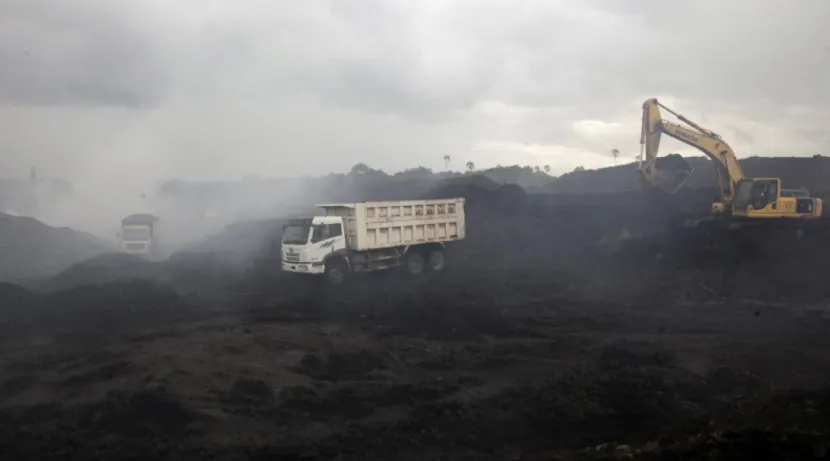
• Second, Minister of Energy and Mineral Resources Bahlil: Verbally holding the line, technically leaving a window.Next, let's look at Indonesia's Minister of Energy and Mineral Resources, Bahlil. One of the areas where Chinese enterprises have reacted most strongly is nickel ore. In the past few years, Chinese capital has driven the rapid expansion of Indonesia's nickel industry chain, forming a huge industrial cluster from stainless steel smelting to new energy battery materials. But now the Indonesian government is clearly tightening the pace, with a core issue being the compression of RKAB mining production quotas.
The Chamber of Commerce letter mentioned that the nickel ore quota cuts for some large mines are significant, even exceeding 70%. For downstream smelters, the most direct pressure is having capacity but lacking ore sources, leading to rising raw material costs and possibly lower operating rates.
Another issue is the HPM (Mineral Benchmark Price Formula). Starting from mid-April 2026, Indonesia's Ministry of Energy adjusted the HPM calculation method for nickel ore, incorporating associated elements such as iron, cobalt, and chromium into the price calculation. In the government's view, this is about returning resource value to the state. But for downstream smelters, it significantly increases the comprehensive cost of raw materials.
Bahlil's response is also representative. He did not deny resource sovereignty or say the policy would be withdrawn, but emphasized that communication has been held with Chinese officials and enterprises, and the HPM and RKAB policies have been explained. In other words, the Ministry's stance is not a full retreat, but open to communication, explanation, and partial adjustment.
Notably, the Indonesian government has temporarily suspended some increases in mineral royalties and export taxes, indicating that it is still looking for a more balanced formula. What does this action show? It shows that the Ministry knows that if pressure is too strong and causes problems in downstream smelters and export chains, the ultimate loss will not only affect Chinese enterprises but also Indonesia's own downstream industrialization.
So for Bahlil, my judgment is: the general direction will not change; Indonesia will continue to increase resource revenue, but in terms of implementation pace and technical details, Chinese enterprises still have room for negotiation and buffer.
• Third, Minister of Finance Sri Mulyani: Tough stance, holding the fiscal line.The attitude of Indonesia's Minister of Finance, Sri Mulyani, is clearly tougher than that of the President and the Minister of Energy. The Chamber of Commerce letter specifically mentioned issues of rising taxes and royalties, increased frequency of tax audits, and fines potentially reaching tens of millions of dollars.
In response to these complaints, Sri Mulyani's reply was direct: Indonesia welcomes legally operating foreign capital, but if enterprises are non-compliant or even illegal, the government will take action. She also mentioned that the government has reported to the Chinese side that some Chinese enterprises in Indonesia have illegal operations.
This is typical Ministry of Finance logic: you can invest, you can make money, but resources belong to Indonesia, taxes must be paid, and foreign exchange must serve Indonesia's financial stability. Especially the DHE SDA (Natural Resource Export Foreign Exchange Retention Policy), the Indonesian government plans to implement new rules from June 1, 2026. The core system requires that more export foreign exchange from related sectors be retained in Indonesia and more flow into Indonesia's state-owned banking system to increase dollar liquidity and stabilize the rupiah.
Public reports show that the new rules involve complex arrangements such as Himbara state banks, a 12-month retention of up to 50% of foreign exchange, and some exception mechanisms. So the Ministry of Finance is not simply targeting Chinese enterprises, but it is a necessary action under the new government's fiscal pressure—Prabowo needs to fund free nutritious meals, promote industrial upgrading, maintain exchange rate stability, and supplement fiscal revenue. These funds must ultimately come from resource-based industries, export-oriented enterprises, and high-profit chains.
Summary: Indonesia is not driving out Chinese capital, but redistributing the cakeLooking at the responses from the President, the Ministry of Energy, and the Ministry of Finance together, the Indonesian government is currently adopting a dual-track strategy:1. Politically: The President cools things down, emphasizing the need to cut cumbersome approvals and rectify bureaucratic rent-seeking, stabilizing investor confidence;2. Industrially: The Ministry of Energy holds the line on resource sovereignty and downstream industrialization, but retains some room for adjustment on technical aspects such as HPM, RKAB, and royalties;3. Financially: The Ministry of Finance's stance is clear—pay the taxes due, retain the foreign exchange required, and fill the compliance gaps.
So I want to remind everyone that this is not the Indonesian government driving out Chinese capital, but Indonesia entering a new phase: from the past "welcome to invest, first build the industry" to now "you can continue to make money, but Indonesia will take more resource revenue, tax revenue, and financial stability benefits."
In the past, many enterprises were accustomed to the pioneer era's approach: find a key person, secure a permit, and advance projects through relationships. But that era is ending. In the future, doing business in Indonesia requires three core competencies:• First, high-standard localization;• Second, extreme tax compliance;• Third, directly incorporating compliance costs for mining, forestry, labor, foreign exchange, and visas into the business model.
For Chinese enterprises, Indonesia still has opportunities, but the next opportunities do not belong to the boldest, but to those who can calculate clearly, comply deeply, and localize steadily. Survive, endure, and wait for Indonesia's current round of policy rebalancing to complete. Only enterprises that truly take root will be qualified to share the cake of the next cycle.
For Chinese enterprises, Indonesia still has opportunities, but the next opportunities do not belong to the boldest, but to those who can calculate clearly, comply deeply, and localize steadily. Survive, endure, and wait for Indonesia's current round of policy rebalancing to complete. Only enterprises that truly take root will be qualified to share the cake of the next cycle.
How did the Indonesian government react after the Chinese Chamber of Commerce letter? In the past two days, the letter from the Indonesia China Chamber of Commerce to President Prabowo has indeed stirred up waves in the Chinese business community in Jakarta. In fact, after studying Indonesia's business-government relations for many years, I have always had a judgment: when looking at Indonesian policies, you cannot just look at what they say, but more importantly, where the interests are stuck.
The collective pushback by Chinese enterprises this time, on the surface, involves issues of taxes, nickel ore quotas, foreign exchange retention, work visas, and enforcement standards, but behind it is a recalibration of resource revenue, fiscal income, and foreign capital influence by the new Indonesian government. More interestingly, in response to this letter, the President, the Minister of Energy and Mineral Resources, and the Minister of Finance have shown three completely different stances. Today, I will break it down for you in plain business language.
• First, President Prabowo: High-profile action, first giving investors a reassurance.Let's look at President Prabowo's attitude. He did not directly mention the Chinese Chamber of Commerce letter in public, but the timing is very sensitive. Shortly after the related news spread, Prabowo publicly criticized Indonesia's permit approval being too slow and regulations too cumbersome at events such as the Jakarta Attorney General's Office. He even bluntly stated that some rules are layered not for national development, but to create opportunities for grassroots bureaucrats to seek rent.
This statement carries significant weight because it acknowledges a long-standing problem: Indonesia does not want to reject investment, but many investment projects are stuck in gray areas such as inter-departmental coordination, local implementation, and bureaucratic rent-seeking. So the President's actions are also clear: on one hand, he wants to maintain Indonesia's international image of welcoming foreign capital; on the other hand, he wants to use this incident to direct criticism toward inefficient bureaucracy and excessive supervision.
Especially against the backdrop of Indonesia's sovereign credit rating outlook being downgraded to negative by Moody's and Fitch, Prabowo must send a signal to international investors: Indonesia will not close its doors, it will reform approvals, and it still needs foreign capital. He is not standing up to endorse any specific country's enterprises, but to maintain the confidence foundation of Indonesia's overall investment environment.
• Second, Minister of Energy and Mineral Resources Bahlil: Verbally holding the line, technically leaving a window.Next, let's look at Indonesia's Minister of Energy and Mineral Resources, Bahlil. One of the areas where Chinese enterprises have reacted most strongly is nickel ore. In the past few years, Chinese capital has driven the rapid expansion of Indonesia's nickel industry chain, forming a huge industrial cluster from stainless steel smelting to new energy battery materials. But now the Indonesian government is clearly tightening the pace, with a core issue being the compression of RKAB mining production quotas.
The Chamber of Commerce letter mentioned that the nickel ore quota cuts for some large mines are significant, even exceeding 70%. For downstream smelters, the most direct pressure is having capacity but lacking ore sources, leading to rising raw material costs and possibly lower operating rates.
Another issue is the HPM (Mineral Benchmark Price Formula). Starting from mid-April 2026, Indonesia's Ministry of Energy adjusted the HPM calculation method for nickel ore, incorporating associated elements such as iron, cobalt, and chromium into the price calculation. In the government's view, this is about returning resource value to the state. But for downstream smelters, it significantly increases the comprehensive cost of raw materials.
Bahlil's response is also representative. He did not deny resource sovereignty or say the policy would be withdrawn, but emphasized that communication has been held with Chinese officials and enterprises, and the HPM and RKAB policies have been explained. In other words, the Ministry's stance is not a full retreat, but open to communication, explanation, and partial adjustment.
Notably, the Indonesian government has temporarily suspended some increases in mineral royalties and export taxes, indicating that it is still looking for a more balanced formula. What does this action show? It shows that the Ministry knows that if pressure is too strong and causes problems in downstream smelters and export chains, the ultimate loss will not only affect Chinese enterprises but also Indonesia's own downstream industrialization.
So for Bahlil, my judgment is: the general direction will not change; Indonesia will continue to increase resource revenue, but in terms of implementation pace and technical details, Chinese enterprises still have room for negotiation and buffer.
• Third, Minister of Finance Sri Mulyani: Tough stance, holding the fiscal line.The attitude of Indonesia's Minister of Finance, Sri Mulyani, is clearly tougher than that of the President and the Minister of Energy. The Chamber of Commerce letter specifically mentioned issues of rising taxes and royalties, increased frequency of tax audits, and fines potentially reaching tens of millions of dollars.
In response to these complaints, Sri Mulyani's reply was direct: Indonesia welcomes legally operating foreign capital, but if enterprises are non-compliant or even illegal, the government will take action. She also mentioned that the government has reported to the Chinese side that some Chinese enterprises in Indonesia have illegal operations.
This is typical Ministry of Finance logic: you can invest, you can make money, but resources belong to Indonesia, taxes must be paid, and foreign exchange must serve Indonesia's financial stability. Especially the DHE SDA (Natural Resource Export Foreign Exchange Retention Policy), the Indonesian government plans to implement new rules from June 1, 2026. The core system requires that more export foreign exchange from related sectors be retained in Indonesia and more flow into Indonesia's state-owned banking system to increase dollar liquidity and stabilize the rupiah.
Public reports show that the new rules involve complex arrangements such as Himbara state banks, a 12-month retention of up to 50% of foreign exchange, and some exception mechanisms. So the Ministry of Finance is not simply targeting Chinese enterprises, but it is a necessary action under the new government's fiscal pressure—Prabowo needs to fund free nutritious meals, promote industrial upgrading, maintain exchange rate stability, and supplement fiscal revenue. These funds must ultimately come from resource-based industries, export-oriented enterprises, and high-profit chains.
Summary: Indonesia is not driving out Chinese capital, but redistributing the cakeLooking at the responses from the President, the Ministry of Energy, and the Ministry of Finance together, the Indonesian government is currently adopting a dual-track strategy:1. Politically: The President cools things down, emphasizing the need to cut cumbersome approvals and rectify bureaucratic rent-seeking, stabilizing investor confidence;2. Industrially: The Ministry of Energy holds the line on resource sovereignty and downstream industrialization, but retains some room for adjustment on technical aspects such as HPM, RKAB, and royalties;3. Financially: The Ministry of Finance's stance is clear—pay the taxes due, retain the foreign exchange required, and fill the compliance gaps.
So I want to remind everyone that this is not the Indonesian government driving out Chinese capital, but Indonesia entering a new phase: from the past "welcome to invest, first build the industry" to now "you can continue to make money, but Indonesia will take more resource revenue, tax revenue, and financial stability benefits."
In the past, many enterprises were accustomed to the pioneer era's approach: find a key person, secure a permit, and advance projects through relationships. But that era is ending. In the future, doing business in Indonesia requires three core competencies:• First, high-standard localization;• Second, extreme tax compliance;• Third, directly incorporating compliance costs for mining, forestry, labor, foreign exchange, and visas into the business model.
For Chinese enterprises, Indonesia still has opportunities, but the next opportunities do not belong to the boldest, but to those who can calculate clearly, comply deeply, and localize steadily. Survive, endure, and wait for Indonesia's current round of policy rebalancing to complete. Only enterprises that truly take root will be qualified to share the cake of the next cycle.
For Chinese enterprises, Indonesia still has opportunities, but the next opportunities do not belong to the boldest, but to those who can calculate clearly, comply deeply, and localize steadily. Survive, endure, and wait for Indonesia's current round of policy rebalancing to complete. Only enterprises that truly take root will be qualified to share the cake of the next cycle.
How did the Indonesian government react after the Chinese Chamber of Commerce letter? In the past two days, the letter from the Indonesia China Chamber of Commerce to President Prabowo has indeed stirred up waves in the Chinese business community in Jakarta. In fact, after studying Indonesia's business-government relations for many years, I have always had a judgment: when looking at Indonesian policies, you cannot just look at what they say, but more importantly, where the interests are stuck.
The collective pushback by Chinese enterprises this time, on the surface, involves issues of taxes, nickel ore quotas, foreign exchange retention, work visas, and enforcement standards, but behind it is a recalibration of resource revenue, fiscal income, and foreign capital influence by the new Indonesian government. More interestingly, in response to this letter, the President, the Minister of Energy and Mineral Resources, and the Minister of Finance have shown three completely different stances. Today, I will break it down for you in plain business language.
• First, President Prabowo: High-profile action, first giving investors a reassurance.Let's look at President Prabowo's attitude. He did not directly mention the Chinese Chamber of Commerce letter in public, but the timing is very sensitive. Shortly after the related news spread, Prabowo publicly criticized Indonesia's permit approval being too slow and regulations too cumbersome at events such as the Jakarta Attorney General's Office. He even bluntly stated that some rules are layered not for national development, but to create opportunities for grassroots bureaucrats to seek rent.
This statement carries significant weight because it acknowledges a long-standing problem: Indonesia does not want to reject investment, but many investment projects are stuck in gray areas such as inter-departmental coordination, local implementation, and bureaucratic rent-seeking. So the President's actions are also clear: on one hand, he wants to maintain Indonesia's international image of welcoming foreign capital; on the other hand, he wants to use this incident to direct criticism toward inefficient bureaucracy and excessive supervision.
Especially against the backdrop of Indonesia's sovereign credit rating outlook being downgraded to negative by Moody's and Fitch, Prabowo must send a signal to international investors: Indonesia will not close its doors, it will reform approvals, and it still needs foreign capital. He is not standing up to endorse any specific country's enterprises, but to maintain the confidence foundation of Indonesia's overall investment environment.
• Second, Minister of Energy and Mineral Resources Bahlil: Verbally holding the line, technically leaving a window.Next, let's look at Indonesia's Minister of Energy and Mineral Resources, Bahlil. One of the areas where Chinese enterprises have reacted most strongly is nickel ore. In the past few years, Chinese capital has driven the rapid expansion of Indonesia's nickel industry chain, forming a huge industrial cluster from stainless steel smelting to new energy battery materials. But now the Indonesian government is clearly tightening the pace, with a core issue being the compression of RKAB mining production quotas.
The Chamber of Commerce letter mentioned that the nickel ore quota cuts for some large mines are significant, even exceeding 70%. For downstream smelters, the most direct pressure is having capacity but lacking ore sources, leading to rising raw material costs and possibly lower operating rates.
Another issue is the HPM (Mineral Benchmark Price Formula). Starting from mid-April 2026, Indonesia's Ministry of Energy adjusted the HPM calculation method for nickel ore, incorporating associated elements such as iron, cobalt, and chromium into the price calculation. In the government's view, this is about returning resource value to the state. But for downstream smelters, it significantly increases the comprehensive cost of raw materials.
Bahlil's response is also representative. He did not deny resource sovereignty or say the policy would be withdrawn, but emphasized that communication has been held with Chinese officials and enterprises, and the HPM and RKAB policies have been explained. In other words, the Ministry's stance is not a full retreat, but open to communication, explanation, and partial adjustment.
Notably, the Indonesian government has temporarily suspended some increases in mineral royalties and export taxes, indicating that it is still looking for a more balanced formula. What does this action show? It shows that the Ministry knows that if pressure is too strong and causes problems in downstream smelters and export chains, the ultimate loss will not only affect Chinese enterprises but also Indonesia's own downstream industrialization.
So for Bahlil, my judgment is: the general direction will not change; Indonesia will continue to increase resource revenue, but in terms of implementation pace and technical details, Chinese enterprises still have room for negotiation and buffer.
• Third, Minister of Finance Sri Mulyani: Tough stance, holding the fiscal line.The attitude of Indonesia's Minister of Finance, Sri Mulyani, is clearly tougher than that of the President and the Minister of Energy. The Chamber of Commerce letter specifically mentioned issues of rising taxes and royalties, increased frequency of tax audits, and fines potentially reaching tens of millions of dollars.
In response to these complaints, Sri Mulyani's reply was direct: Indonesia welcomes legally operating foreign capital, but if enterprises are non-compliant or even illegal, the government will take action. She also mentioned that the government has reported to the Chinese side that some Chinese enterprises in Indonesia have illegal operations.
This is typical Ministry of Finance logic: you can invest, you can make money, but resources belong to Indonesia, taxes must be paid, and foreign exchange must serve Indonesia's financial stability. Especially the DHE SDA (Natural Resource Export Foreign Exchange Retention Policy), the Indonesian government plans to implement new rules from June 1, 2026. The core system requires that more export foreign exchange from related sectors be retained in Indonesia and more flow into Indonesia's state-owned banking system to increase dollar liquidity and stabilize the rupiah.
Public reports show that the new rules involve complex arrangements such as Himbara state banks, a 12-month retention of up to 50% of foreign exchange, and some exception mechanisms. So the Ministry of Finance is not simply targeting Chinese enterprises, but it is a necessary action under the new government's fiscal pressure—Prabowo needs to fund free nutritious meals, promote industrial upgrading, maintain exchange rate stability, and supplement fiscal revenue. These funds must ultimately come from resource-based industries, export-oriented enterprises, and high-profit chains.
Summary: Indonesia is not driving out Chinese capital, but redistributing the cakeLooking at the responses from the President, the Ministry of Energy, and the Ministry of Finance together, the Indonesian government is currently adopting a dual-track strategy:1. Politically: The President cools things down, emphasizing the need to cut cumbersome approvals and rectify bureaucratic rent-seeking, stabilizing investor confidence;2. Industrially: The Ministry of Energy holds the line on resource sovereignty and downstream industrialization, but retains some room for adjustment on technical aspects such as HPM, RKAB, and royalties;3. Financially: The Ministry of Finance's stance is clear—pay the taxes due, retain the foreign exchange required, and fill the compliance gaps.
So I want to remind everyone that this is not the Indonesian government driving out Chinese capital, but Indonesia entering a new phase: from the past "welcome to invest, first build the industry" to now "you can continue to make money, but Indonesia will take more resource revenue, tax revenue, and financial stability benefits."
In the past, many enterprises were accustomed to the pioneer era's approach: find a key person, secure a permit, and advance projects through relationships. But that era is ending. In the future, doing business in Indonesia requires three core competencies:• First, high-standard localization;• Second, extreme tax compliance;• Third, directly incorporating compliance costs for mining, forestry, labor, foreign exchange, and visas into the business model.
For Chinese enterprises, Indonesia still has opportunities, but the next opportunities do not belong to the boldest, but to those who can calculate clearly, comply deeply, and localize steadily. Survive, endure, and wait for Indonesia's current round of policy rebalancing to complete. Only enterprises that truly take root will be qualified to share the cake of the next cycle.
For Chinese enterprises, Indonesia still has opportunities, but the next opportunities do not belong to the boldest, but to those who can calculate clearly, comply deeply, and localize steadily. Survive, endure, and wait for Indonesia's current round of policy rebalancing to complete. Only enterprises that truly take root will be qualified to share the cake of the next cycle.
How did the Indonesian government react after the Chinese Chamber of Commerce letter? In the past two days, the letter from the Indonesia China Chamber of Commerce to President Prabowo has indeed stirred up waves in the Chinese business community in Jakarta. In fact, after studying Indonesia's business-government relations for many years, I have always had a judgment: when looking at Indonesian policies, you cannot just look at what they say, but more importantly, where the interests are stuck.
The collective pushback by Chinese enterprises this time, on the surface, involves issues of taxes, nickel ore quotas, foreign exchange retention, work visas, and enforcement standards, but behind it is a recalibration of resource revenue, fiscal income, and foreign capital influence by the new Indonesian government. More interestingly, in response to this letter, the President, the Minister of Energy and Mineral Resources, and the Minister of Finance have shown three completely different stances. Today, I will break it down for you in plain business language.
• First, President Prabowo: High-profile action, first giving investors a reassurance.Let's look at President Prabowo's attitude. He did not directly mention the Chinese Chamber of Commerce letter in public, but the timing is very sensitive. Shortly after the related news spread, Prabowo publicly criticized Indonesia's permit approval being too slow and regulations too cumbersome at events such as the Jakarta Attorney General's Office. He even bluntly stated that some rules are layered not for national development, but to create opportunities for grassroots bureaucrats to seek rent.
This statement carries significant weight because it acknowledges a long-standing problem: Indonesia does not want to reject investment, but many investment projects are stuck in gray areas such as inter-departmental coordination, local implementation, and bureaucratic rent-seeking. So the President's actions are also clear: on one hand, he wants to maintain Indonesia's international image of welcoming foreign capital; on the other hand, he wants to use this incident to direct criticism toward inefficient bureaucracy and excessive supervision.
Especially against the backdrop of Indonesia's sovereign credit rating outlook being downgraded to negative by Moody's and Fitch, Prabowo must send a signal to international investors: Indonesia will not close its doors, it will reform approvals, and it still needs foreign capital. He is not standing up to endorse any specific country's enterprises, but to maintain the confidence foundation of Indonesia's overall investment environment.
• Second, Minister of Energy and Mineral Resources Bahlil: Verbally holding the line, technically leaving a window.Next, let's look at Indonesia's Minister of Energy and Mineral Resources, Bahlil. One of the areas where Chinese enterprises have reacted most strongly is nickel ore. In the past few years, Chinese capital has driven the rapid expansion of Indonesia's nickel industry chain, forming a huge industrial cluster from stainless steel smelting to new energy battery materials. But now the Indonesian government is clearly tightening the pace, with a core issue being the compression of RKAB mining production quotas.
The Chamber of Commerce letter mentioned that the nickel ore quota cuts for some large mines are significant, even exceeding 70%. For downstream smelters, the most direct pressure is having capacity but lacking ore sources, leading to rising raw material costs and possibly lower operating rates.
Another issue is the HPM (Mineral Benchmark Price Formula). Starting from mid-April 2026, Indonesia's Ministry of Energy adjusted the HPM calculation method for nickel ore, incorporating associated elements such as iron, cobalt, and chromium into the price calculation. In the government's view, this is about returning resource value to the state. But for downstream smelters, it significantly increases the comprehensive cost of raw materials.
Bahlil's response is also representative. He did not deny resource sovereignty or say the policy would be withdrawn, but emphasized that communication has been held with Chinese officials and enterprises, and the HPM and RKAB policies have been explained. In other words, the Ministry's stance is not a full retreat, but open to communication, explanation, and partial adjustment.
Notably, the Indonesian government has temporarily suspended some increases in mineral royalties and export taxes, indicating that it is still looking for a more balanced formula. What does this action show? It shows that the Ministry knows that if pressure is too strong and causes problems in downstream smelters and export chains, the ultimate loss will not only affect Chinese enterprises but also Indonesia's own downstream industrialization.
So for Bahlil, my judgment is: the general direction will not change; Indonesia will continue to increase resource revenue, but in terms of implementation pace and technical details, Chinese enterprises still have room for negotiation and buffer.
• Third, Minister of Finance Sri Mulyani: Tough stance, holding the fiscal line.The attitude of Indonesia's Minister of Finance, Sri Mulyani, is clearly tougher than that of the President and the Minister of Energy. The Chamber of Commerce letter specifically mentioned issues of rising taxes and royalties, increased frequency of tax audits, and fines potentially reaching tens of millions of dollars.
In response to these complaints, Sri Mulyani's reply was direct: Indonesia welcomes legally operating foreign capital, but if enterprises are non-compliant or even illegal, the government will take action. She also mentioned that the government has reported to the Chinese side that some Chinese enterprises in Indonesia have illegal operations.
This is typical Ministry of Finance logic: you can invest, you can make money, but resources belong to Indonesia, taxes must be paid, and foreign exchange must serve Indonesia's financial stability. Especially the DHE SDA (Natural Resource Export Foreign Exchange Retention Policy), the Indonesian government plans to implement new rules from June 1, 2026. The core system requires that more export foreign exchange from related sectors be retained in Indonesia and more flow into Indonesia's state-owned banking system to increase dollar liquidity and stabilize the rupiah.
Public reports show that the new rules involve complex arrangements such as Himbara state banks, a 12-month retention of up to 50% of foreign exchange, and some exception mechanisms. So the Ministry of Finance is not simply targeting Chinese enterprises, but it is a necessary action under the new government's fiscal pressure—Prabowo needs to fund free nutritious meals, promote industrial upgrading, maintain exchange rate stability, and supplement fiscal revenue. These funds must ultimately come from resource-based industries, export-oriented enterprises, and high-profit chains.
Summary: Indonesia is not driving out Chinese capital, but redistributing the cakeLooking at the responses from the President, the Ministry of Energy, and the Ministry of Finance together, the Indonesian government is currently adopting a dual-track strategy:1. Politically: The President cools things down, emphasizing the need to cut cumbersome approvals and rectify bureaucratic rent-seeking, stabilizing investor confidence;2. Industrially: The Ministry of Energy holds the line on resource sovereignty and downstream industrialization, but retains some room for adjustment on technical aspects such as HPM, RKAB, and royalties;3. Financially: The Ministry of Finance's stance is clear—pay the taxes due, retain the foreign exchange required, and fill the compliance gaps.
So I want to remind everyone that this is not the Indonesian government driving out Chinese capital, but Indonesia entering a new phase: from the past "welcome to invest, first build the industry" to now "you can continue to make money, but Indonesia will take more resource revenue, tax revenue, and financial stability benefits."
In the past, many enterprises were accustomed to the pioneer era's approach: find a key person, secure a permit, and advance projects through relationships. But that era is ending. In the future, doing business in Indonesia requires three core competencies:• First, high-standard localization;• Second, extreme tax compliance;• Third, directly incorporating compliance costs for mining, forestry, labor, foreign exchange, and visas into the business model.
For Chinese enterprises, Indonesia still has opportunities, but the next opportunities do not belong to the boldest, but to those who can calculate clearly, comply deeply, and localize steadily. Survive, endure, and wait for Indonesia's current round of policy rebalancing to complete. Only enterprises that truly take root will be qualified to share the cake of the next cycle.