

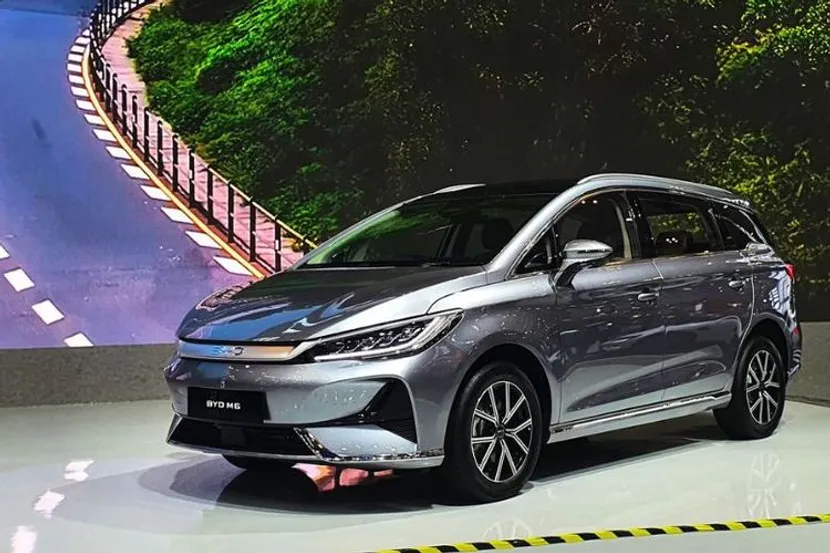
 The overall development of Indonesia's electric vehicle market continues to improve. Previously, the market was dominated by hatchbacks and compact SUVs, but now multi-purpose electric MPVs for family use are increasingly favored by local consumers, becoming a new market consumption trend. As a mainstream family vehicle, electric MPVs are rapidly opening up the Indonesian household consumer market thanks to their spacious interiors, comfortable driving experience, and significantly lower operating costs compared to traditional fuel vehicles. According to wholesale sales data for January to April 2026 released by the Indonesian Automotive Industry Association, competition in the local new energy MPV segment is clearly diverging, with some automakers going all out to capture market share, while many others are still slowly laying out their strategies to find opportunities. In the sales ranking, Chinese automaker brands firmly hold a dominant market position. BYD's flagship model M6 has topped the charts, gaining widespread consumer recognition since its launch due to outstanding product performance, with cumulative sales reaching 4,820 units in the first four months of this year alone. Priced between IDR 383 million and IDR 433 million, the model features a 7-seat family layout and is affordable and practical, which are the core advantages that keep it firmly at the top of the market.
In second place is the Wuling Cortez Darion EV model, leveraging the market reputation accumulated by Wuling's classic models. This electric MPV achieved sales of 2,531 units during the same period, priced at IDR 399 million to IDR 459 million, steadily expanding its market share behind the leading model. The high-end luxury electric MPV segment also has a stable consumer base and has not been affected by the mid-range models. BYD's premium sub-brand Denza D9 secured third place with a price of IDR 950 million, selling 2,149 units cumulatively, an impressive performance for a high-end business and family vehicle. Following closely, the XPeng X9, priced at IDR 990 million to IDR 1.209 billion, sold 692 units in the first four months, establishing a foothold in the high-end market. European brand Volkswagen's retro-styled electric MPV ID.Buzz, priced as high as IDR 1.495 billion to IDR 1.575 billion, saw low market acceptance due to its high price, with only 50 units sold during the same period, ranking seventh.
Performance for other models in the mid-range market has been relatively lackluster. The Aletra L8, priced at IDR 488 million, sold 168 units cumulatively, gradually building a presence in the market. SAIC Maxus is making slow progress in the Indonesian market. Its high-end model Mifa 9, priced at IDR 899 million, sold only 94 units; the lower-positioned Maxus Mifa 7, priced at IDR 799 million, recorded wholesale sales of only 5 units in the first four months, indicating a serious lack of market penetration.
Looking at overall market sales performance, it is clear that at this stage, Indonesian consumers' key considerations when choosing an electric MPV are centered on three main factors: practical interior space, battery range, and a reasonable price. Value for money remains the key driver of market consumption.
Currently, the Indonesian electric MPV market has formed a clear pattern where mid-range family models drive volume, while high-end business models secure stable profits. Chinese independent brands, with their rich product matrix and reasonable pricing, firmly hold the dominant position in the local market, while European and American high-end models remain confined to niche consumer segments. The overall market structure is unlikely to change significantly in the short term.
The overall development of Indonesia's electric vehicle market continues to improve. Previously, the market was dominated by hatchbacks and compact SUVs, but now multi-purpose electric MPVs for family use are increasingly favored by local consumers, becoming a new market consumption trend. As a mainstream family vehicle, electric MPVs are rapidly opening up the Indonesian household consumer market thanks to their spacious interiors, comfortable driving experience, and significantly lower operating costs compared to traditional fuel vehicles. According to wholesale sales data for January to April 2026 released by the Indonesian Automotive Industry Association, competition in the local new energy MPV segment is clearly diverging, with some automakers going all out to capture market share, while many others are still slowly laying out their strategies to find opportunities. In the sales ranking, Chinese automaker brands firmly hold a dominant market position. BYD's flagship model M6 has topped the charts, gaining widespread consumer recognition since its launch due to outstanding product performance, with cumulative sales reaching 4,820 units in the first four months of this year alone. Priced between IDR 383 million and IDR 433 million, the model features a 7-seat family layout and is affordable and practical, which are the core advantages that keep it firmly at the top of the market.
In second place is the Wuling Cortez Darion EV model, leveraging the market reputation accumulated by Wuling's classic models. This electric MPV achieved sales of 2,531 units during the same period, priced at IDR 399 million to IDR 459 million, steadily expanding its market share behind the leading model. The high-end luxury electric MPV segment also has a stable consumer base and has not been affected by the mid-range models. BYD's premium sub-brand Denza D9 secured third place with a price of IDR 950 million, selling 2,149 units cumulatively, an impressive performance for a high-end business and family vehicle. Following closely, the XPeng X9, priced at IDR 990 million to IDR 1.209 billion, sold 692 units in the first four months, establishing a foothold in the high-end market. European brand Volkswagen's retro-styled electric MPV ID.Buzz, priced as high as IDR 1.495 billion to IDR 1.575 billion, saw low market acceptance due to its high price, with only 50 units sold during the same period, ranking seventh.
Performance for other models in the mid-range market has been relatively lackluster. The Aletra L8, priced at IDR 488 million, sold 168 units cumulatively, gradually building a presence in the market. SAIC Maxus is making slow progress in the Indonesian market. Its high-end model Mifa 9, priced at IDR 899 million, sold only 94 units; the lower-positioned Maxus Mifa 7, priced at IDR 799 million, recorded wholesale sales of only 5 units in the first four months, indicating a serious lack of market penetration.
Looking at overall market sales performance, it is clear that at this stage, Indonesian consumers' key considerations when choosing an electric MPV are centered on three main factors: practical interior space, battery range, and a reasonable price. Value for money remains the key driver of market consumption.
Currently, the Indonesian electric MPV market has formed a clear pattern where mid-range family models drive volume, while high-end business models secure stable profits. Chinese independent brands, with their rich product matrix and reasonable pricing, firmly hold the dominant position in the local market, while European and American high-end models remain confined to niche consumer segments. The overall market structure is unlikely to change significantly in the short term.
The overall development of Indonesia's electric vehicle market continues to improve. Previously, the market was dominated by hatchbacks and compact SUVs, but now multi-purpose electric MPVs for family use are increasingly favored by local consumers, becoming a new market consumption trend. As a mainstream family vehicle, electric MPVs are rapidly opening up the Indonesian household consumer market thanks to their spacious interiors, comfortable driving experience, and significantly lower operating costs compared to traditional fuel vehicles. According to wholesale sales data for January to April 2026 released by the Indonesian Automotive Industry Association, competition in the local new energy MPV segment is clearly diverging, with some automakers going all out to capture market share, while many others are still slowly laying out their strategies to find opportunities. In the sales ranking, Chinese automaker brands firmly hold a dominant market position. BYD's flagship model M6 has topped the charts, gaining widespread consumer recognition since its launch due to outstanding product performance, with cumulative sales reaching 4,820 units in the first four months of this year alone. Priced between IDR 383 million and IDR 433 million, the model features a 7-seat family layout and is affordable and practical, which are the core advantages that keep it firmly at the top of the market.
In second place is the Wuling Cortez Darion EV model, leveraging the market reputation accumulated by Wuling's classic models. This electric MPV achieved sales of 2,531 units during the same period, priced at IDR 399 million to IDR 459 million, steadily expanding its market share behind the leading model. The high-end luxury electric MPV segment also has a stable consumer base and has not been affected by the mid-range models. BYD's premium sub-brand Denza D9 secured third place with a price of IDR 950 million, selling 2,149 units cumulatively, an impressive performance for a high-end business and family vehicle. Following closely, the XPeng X9, priced at IDR 990 million to IDR 1.209 billion, sold 692 units in the first four months, establishing a foothold in the high-end market. European brand Volkswagen's retro-styled electric MPV ID.Buzz, priced as high as IDR 1.495 billion to IDR 1.575 billion, saw low market acceptance due to its high price, with only 50 units sold during the same period, ranking seventh.
Performance for other models in the mid-range market has been relatively lackluster. The Aletra L8, priced at IDR 488 million, sold 168 units cumulatively, gradually building a presence in the market. SAIC Maxus is making slow progress in the Indonesian market. Its high-end model Mifa 9, priced at IDR 899 million, sold only 94 units; the lower-positioned Maxus Mifa 7, priced at IDR 799 million, recorded wholesale sales of only 5 units in the first four months, indicating a serious lack of market penetration.
Looking at overall market sales performance, it is clear that at this stage, Indonesian consumers' key considerations when choosing an electric MPV are centered on three main factors: practical interior space, battery range, and a reasonable price. Value for money remains the key driver of market consumption.
Currently, the Indonesian electric MPV market has formed a clear pattern where mid-range family models drive volume, while high-end business models secure stable profits. Chinese independent brands, with their rich product matrix and reasonable pricing, firmly hold the dominant position in the local market, while European and American high-end models remain confined to niche consumer segments. The overall market structure is unlikely to change significantly in the short term.
The overall development of Indonesia's electric vehicle market continues to improve. Previously, the market was dominated by hatchbacks and compact SUVs, but now multi-purpose electric MPVs for family use are increasingly favored by local consumers, becoming a new market consumption trend. As a mainstream family vehicle, electric MPVs are rapidly opening up the Indonesian household consumer market thanks to their spacious interiors, comfortable driving experience, and significantly lower operating costs compared to traditional fuel vehicles. According to wholesale sales data for January to April 2026 released by the Indonesian Automotive Industry Association, competition in the local new energy MPV segment is clearly diverging, with some automakers going all out to capture market share, while many others are still slowly laying out their strategies to find opportunities. In the sales ranking, Chinese automaker brands firmly hold a dominant market position. BYD's flagship model M6 has topped the charts, gaining widespread consumer recognition since its launch due to outstanding product performance, with cumulative sales reaching 4,820 units in the first four months of this year alone. Priced between IDR 383 million and IDR 433 million, the model features a 7-seat family layout and is affordable and practical, which are the core advantages that keep it firmly at the top of the market.
In second place is the Wuling Cortez Darion EV model, leveraging the market reputation accumulated by Wuling's classic models. This electric MPV achieved sales of 2,531 units during the same period, priced at IDR 399 million to IDR 459 million, steadily expanding its market share behind the leading model. The high-end luxury electric MPV segment also has a stable consumer base and has not been affected by the mid-range models. BYD's premium sub-brand Denza D9 secured third place with a price of IDR 950 million, selling 2,149 units cumulatively, an impressive performance for a high-end business and family vehicle. Following closely, the XPeng X9, priced at IDR 990 million to IDR 1.209 billion, sold 692 units in the first four months, establishing a foothold in the high-end market. European brand Volkswagen's retro-styled electric MPV ID.Buzz, priced as high as IDR 1.495 billion to IDR 1.575 billion, saw low market acceptance due to its high price, with only 50 units sold during the same period, ranking seventh.
Performance for other models in the mid-range market has been relatively lackluster. The Aletra L8, priced at IDR 488 million, sold 168 units cumulatively, gradually building a presence in the market. SAIC Maxus is making slow progress in the Indonesian market. Its high-end model Mifa 9, priced at IDR 899 million, sold only 94 units; the lower-positioned Maxus Mifa 7, priced at IDR 799 million, recorded wholesale sales of only 5 units in the first four months, indicating a serious lack of market penetration.
Looking at overall market sales performance, it is clear that at this stage, Indonesian consumers' key considerations when choosing an electric MPV are centered on three main factors: practical interior space, battery range, and a reasonable price. Value for money remains the key driver of market consumption.
Currently, the Indonesian electric MPV market has formed a clear pattern where mid-range family models drive volume, while high-end business models secure stable profits. Chinese independent brands, with their rich product matrix and reasonable pricing, firmly hold the dominant position in the local market, while European and American high-end models remain confined to niche consumer segments. The overall market structure is unlikely to change significantly in the short term.