
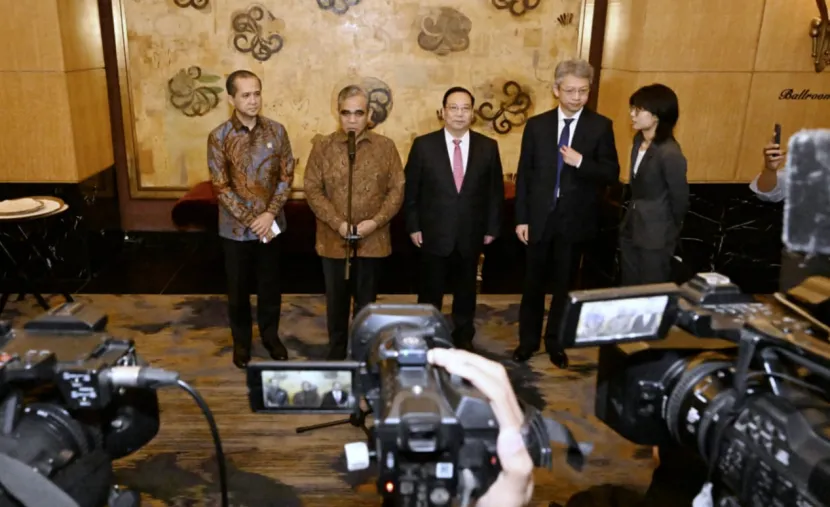
 The Prabowo government in Indonesia has demonstrated a firm commitment to poverty reduction, driving a sustained decline in the poverty rate through multiple strategic programs. According to data from the Indonesian Central Bureau of Statistics, in 2025, Indonesia's poverty rate dropped to 8.47%, with the number of people in extreme poverty significantly decreasing from 3.56 million to approximately 2.2 million, showing outstanding poverty reduction results. The Minister of Immigration and Settlement stated that this achievement reflects the high priority the Prabowo government has placed on poverty reduction over the past year and a half. As early as November 2022 during his visit to China, President Prabowo expressed his intention to learn from China's poverty reduction experience, and since then, the Indonesian government has continuously deepened cooperation with China in poverty reduction and multiple fields.
China-Indonesia poverty reduction cooperation has yielded tangible results, including the construction of a vocational and technical school in Marauke, Papua Province, to empower employment through education and support poverty reduction. The Speaker of the Indonesian House of Representatives noted that China's experience in managing the economy of 1.4 billion people provides an important reference for Indonesia's development, and its policies can stabilize society and boost public confidence. At the domestic implementation level, the Ministry of Immigration and Settlement is building an economic corridor in Central Sulawesi Province, focusing on the cultivation of cash crops such as coffee, cocoa, and durian. In mid-April 2026, the region achieved its first export of frozen durian to China.
China's durian market is estimated at IDR 120 to 137 trillion, directly driving local durian prices from IDR 4,000-5,000 per piece to over IDR 25,000, significantly increasing people's income and supporting poverty reduction. In addition, the Indonesian government is promoting food self-sufficiency by establishing a rice research and development center, with the goal of increasing rice yields from 2 tons per hectare to 6-8 tons. At the same time, drawing on China's industrialization and downstream industry development models, Indonesia is advancing infrastructure construction, population resettlement, and the creation of new economic centers. By creating jobs and increasing income, the government continues to focus on poverty reduction goals and promote sustainable economic and social development.
The Prabowo government in Indonesia has demonstrated a firm commitment to poverty reduction, driving a sustained decline in the poverty rate through multiple strategic programs. According to data from the Indonesian Central Bureau of Statistics, in 2025, Indonesia's poverty rate dropped to 8.47%, with the number of people in extreme poverty significantly decreasing from 3.56 million to approximately 2.2 million, showing outstanding poverty reduction results. The Minister of Immigration and Settlement stated that this achievement reflects the high priority the Prabowo government has placed on poverty reduction over the past year and a half. As early as November 2022 during his visit to China, President Prabowo expressed his intention to learn from China's poverty reduction experience, and since then, the Indonesian government has continuously deepened cooperation with China in poverty reduction and multiple fields.
China-Indonesia poverty reduction cooperation has yielded tangible results, including the construction of a vocational and technical school in Marauke, Papua Province, to empower employment through education and support poverty reduction. The Speaker of the Indonesian House of Representatives noted that China's experience in managing the economy of 1.4 billion people provides an important reference for Indonesia's development, and its policies can stabilize society and boost public confidence. At the domestic implementation level, the Ministry of Immigration and Settlement is building an economic corridor in Central Sulawesi Province, focusing on the cultivation of cash crops such as coffee, cocoa, and durian. In mid-April 2026, the region achieved its first export of frozen durian to China.
China's durian market is estimated at IDR 120 to 137 trillion, directly driving local durian prices from IDR 4,000-5,000 per piece to over IDR 25,000, significantly increasing people's income and supporting poverty reduction. In addition, the Indonesian government is promoting food self-sufficiency by establishing a rice research and development center, with the goal of increasing rice yields from 2 tons per hectare to 6-8 tons. At the same time, drawing on China's industrialization and downstream industry development models, Indonesia is advancing infrastructure construction, population resettlement, and the creation of new economic centers. By creating jobs and increasing income, the government continues to focus on poverty reduction goals and promote sustainable economic and social development.
The Prabowo government in Indonesia has demonstrated a firm commitment to poverty reduction, driving a sustained decline in the poverty rate through multiple strategic programs. According to data from the Indonesian Central Bureau of Statistics, in 2025, Indonesia's poverty rate dropped to 8.47%, with the number of people in extreme poverty significantly decreasing from 3.56 million to approximately 2.2 million, showing outstanding poverty reduction results. The Minister of Immigration and Settlement stated that this achievement reflects the high priority the Prabowo government has placed on poverty reduction over the past year and a half. As early as November 2022 during his visit to China, President Prabowo expressed his intention to learn from China's poverty reduction experience, and since then, the Indonesian government has continuously deepened cooperation with China in poverty reduction and multiple fields.
China-Indonesia poverty reduction cooperation has yielded tangible results, including the construction of a vocational and technical school in Marauke, Papua Province, to empower employment through education and support poverty reduction. The Speaker of the Indonesian House of Representatives noted that China's experience in managing the economy of 1.4 billion people provides an important reference for Indonesia's development, and its policies can stabilize society and boost public confidence. At the domestic implementation level, the Ministry of Immigration and Settlement is building an economic corridor in Central Sulawesi Province, focusing on the cultivation of cash crops such as coffee, cocoa, and durian. In mid-April 2026, the region achieved its first export of frozen durian to China.
China's durian market is estimated at IDR 120 to 137 trillion, directly driving local durian prices from IDR 4,000-5,000 per piece to over IDR 25,000, significantly increasing people's income and supporting poverty reduction. In addition, the Indonesian government is promoting food self-sufficiency by establishing a rice research and development center, with the goal of increasing rice yields from 2 tons per hectare to 6-8 tons. At the same time, drawing on China's industrialization and downstream industry development models, Indonesia is advancing infrastructure construction, population resettlement, and the creation of new economic centers. By creating jobs and increasing income, the government continues to focus on poverty reduction goals and promote sustainable economic and social development.
The Prabowo government in Indonesia has demonstrated a firm commitment to poverty reduction, driving a sustained decline in the poverty rate through multiple strategic programs. According to data from the Indonesian Central Bureau of Statistics, in 2025, Indonesia's poverty rate dropped to 8.47%, with the number of people in extreme poverty significantly decreasing from 3.56 million to approximately 2.2 million, showing outstanding poverty reduction results. The Minister of Immigration and Settlement stated that this achievement reflects the high priority the Prabowo government has placed on poverty reduction over the past year and a half. As early as November 2022 during his visit to China, President Prabowo expressed his intention to learn from China's poverty reduction experience, and since then, the Indonesian government has continuously deepened cooperation with China in poverty reduction and multiple fields.
China-Indonesia poverty reduction cooperation has yielded tangible results, including the construction of a vocational and technical school in Marauke, Papua Province, to empower employment through education and support poverty reduction. The Speaker of the Indonesian House of Representatives noted that China's experience in managing the economy of 1.4 billion people provides an important reference for Indonesia's development, and its policies can stabilize society and boost public confidence. At the domestic implementation level, the Ministry of Immigration and Settlement is building an economic corridor in Central Sulawesi Province, focusing on the cultivation of cash crops such as coffee, cocoa, and durian. In mid-April 2026, the region achieved its first export of frozen durian to China.
China's durian market is estimated at IDR 120 to 137 trillion, directly driving local durian prices from IDR 4,000-5,000 per piece to over IDR 25,000, significantly increasing people's income and supporting poverty reduction. In addition, the Indonesian government is promoting food self-sufficiency by establishing a rice research and development center, with the goal of increasing rice yields from 2 tons per hectare to 6-8 tons. At the same time, drawing on China's industrialization and downstream industry development models, Indonesia is advancing infrastructure construction, population resettlement, and the creation of new economic centers. By creating jobs and increasing income, the government continues to focus on poverty reduction goals and promote sustainable economic and social development.