
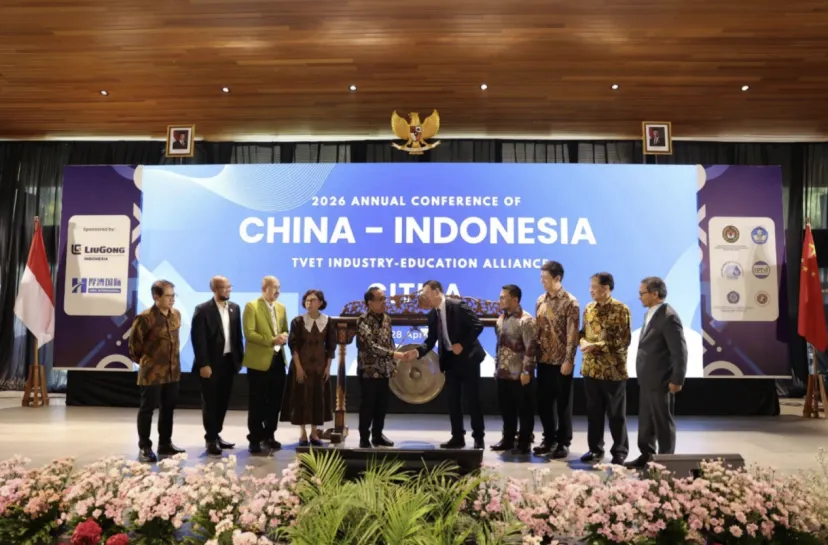
 The annual meeting of the China-Indonesia Vocational Education Industry-Academia Alliance (CITIEA) was recently held at the Innovation and Creativity Center of Gadjah Mada University in Indonesia. The Coordinating Minister for Human Development and Culture of Indonesia stated at the opening ceremony that in the face of global shocks such as technological change, climate change, and geopolitical shifts, all countries must strengthen collaboration and enhance competitiveness. He noted that this is an era of Asia's rise, and Indonesia and China should jointly become the core driving force leading Asia's development. He emphasized the need to view various global changes as opportunities for leapfrog development, promote deep integration of education and industry, ensure cooperation translates into practical actions that truly benefit society and people's livelihoods. At the same time, strengthen deep enterprise involvement in education, rely on industry-education integration to solve social development challenges, and enable vocational education to create real social value.
The Rector of Gadjah Mada University stated that international cooperation is key to addressing rapid industrial change. Universities must closely align with digital transformation and sustainable development needs, optimize curriculum systems, strengthen applied research, and proactively adapt to industry changes through cross-border partnerships. This forum has built a platform for precise alignment between education and industry needs, dedicated to constructing a future ecosystem that connects talent, technology, and industry, emphasizing that cross-border collaboration is no longer an option but a necessity. This annual alliance meeting is already in its third year, hosted by Gadjah Mada University. As a strategic exchange platform between governments, vocational education institutions, and industries of both countries, the alliance helps vocational education adapt to global industrial upgrading while enhancing Indonesia's influence in the ASEAN vocational education network. This meeting also serves the functions of annual evaluation and new project planning, deepening bilateral vocational education cooperation.
Gadjah Mada University's Dean of the Vocational College introduced that the conference attracted over 300 representatives from dozens of vocational schools and multinational enterprises from Indonesia and China, with all parties jointly promoting global collaboration to empower vocational education development. The forum connects the ecosystems of education, industry, and technological innovation, covering the full chain from talent cultivation to corporate employment, focusing on comprehensive linkage between education, training, and the labor market, helping vocational graduates enter the international job market. In addition, bilateral cooperation emphasizes strengthening applied research and joint technology development, expanding channels for overseas internships, global recruitment, and scientific research collaboration, achieving practical win-win outcomes for both countries. Representatives from the Chinese side of the alliance stated that China-Indonesia vocational education cooperation continues to expand, pooling resources from schools and industries in both countries, using mutual learning of knowledge and experience to improve vocational education quality, relying on global interconnected ecosystems to meet future industry challenges, and building international development platforms for teachers and students.
An advisor from Indonesia's Ministry of Higher Education also pointed out that there remains a gap between the number of vocational graduates and industry demand, and there is an urgent need to optimize the vocational education system. The government must act as a bridge between education and industry, using professional certification and international cooperation to enhance labor competitiveness, promote collaborative talent cultivation between universities and industries, so graduates possess employment-ready capabilities, and leverage global cooperation and qualification certification to help Indonesian talent thrive in the international workplace and drive domestic industrial economic growth.
The annual meeting of the China-Indonesia Vocational Education Industry-Academia Alliance (CITIEA) was recently held at the Innovation and Creativity Center of Gadjah Mada University in Indonesia. The Coordinating Minister for Human Development and Culture of Indonesia stated at the opening ceremony that in the face of global shocks such as technological change, climate change, and geopolitical shifts, all countries must strengthen collaboration and enhance competitiveness. He noted that this is an era of Asia's rise, and Indonesia and China should jointly become the core driving force leading Asia's development. He emphasized the need to view various global changes as opportunities for leapfrog development, promote deep integration of education and industry, ensure cooperation translates into practical actions that truly benefit society and people's livelihoods. At the same time, strengthen deep enterprise involvement in education, rely on industry-education integration to solve social development challenges, and enable vocational education to create real social value.
The Rector of Gadjah Mada University stated that international cooperation is key to addressing rapid industrial change. Universities must closely align with digital transformation and sustainable development needs, optimize curriculum systems, strengthen applied research, and proactively adapt to industry changes through cross-border partnerships. This forum has built a platform for precise alignment between education and industry needs, dedicated to constructing a future ecosystem that connects talent, technology, and industry, emphasizing that cross-border collaboration is no longer an option but a necessity. This annual alliance meeting is already in its third year, hosted by Gadjah Mada University. As a strategic exchange platform between governments, vocational education institutions, and industries of both countries, the alliance helps vocational education adapt to global industrial upgrading while enhancing Indonesia's influence in the ASEAN vocational education network. This meeting also serves the functions of annual evaluation and new project planning, deepening bilateral vocational education cooperation.
Gadjah Mada University's Dean of the Vocational College introduced that the conference attracted over 300 representatives from dozens of vocational schools and multinational enterprises from Indonesia and China, with all parties jointly promoting global collaboration to empower vocational education development. The forum connects the ecosystems of education, industry, and technological innovation, covering the full chain from talent cultivation to corporate employment, focusing on comprehensive linkage between education, training, and the labor market, helping vocational graduates enter the international job market. In addition, bilateral cooperation emphasizes strengthening applied research and joint technology development, expanding channels for overseas internships, global recruitment, and scientific research collaboration, achieving practical win-win outcomes for both countries. Representatives from the Chinese side of the alliance stated that China-Indonesia vocational education cooperation continues to expand, pooling resources from schools and industries in both countries, using mutual learning of knowledge and experience to improve vocational education quality, relying on global interconnected ecosystems to meet future industry challenges, and building international development platforms for teachers and students.
An advisor from Indonesia's Ministry of Higher Education also pointed out that there remains a gap between the number of vocational graduates and industry demand, and there is an urgent need to optimize the vocational education system. The government must act as a bridge between education and industry, using professional certification and international cooperation to enhance labor competitiveness, promote collaborative talent cultivation between universities and industries, so graduates possess employment-ready capabilities, and leverage global cooperation and qualification certification to help Indonesian talent thrive in the international workplace and drive domestic industrial economic growth.
The annual meeting of the China-Indonesia Vocational Education Industry-Academia Alliance (CITIEA) was recently held at the Innovation and Creativity Center of Gadjah Mada University in Indonesia. The Coordinating Minister for Human Development and Culture of Indonesia stated at the opening ceremony that in the face of global shocks such as technological change, climate change, and geopolitical shifts, all countries must strengthen collaboration and enhance competitiveness. He noted that this is an era of Asia's rise, and Indonesia and China should jointly become the core driving force leading Asia's development. He emphasized the need to view various global changes as opportunities for leapfrog development, promote deep integration of education and industry, ensure cooperation translates into practical actions that truly benefit society and people's livelihoods. At the same time, strengthen deep enterprise involvement in education, rely on industry-education integration to solve social development challenges, and enable vocational education to create real social value.
The Rector of Gadjah Mada University stated that international cooperation is key to addressing rapid industrial change. Universities must closely align with digital transformation and sustainable development needs, optimize curriculum systems, strengthen applied research, and proactively adapt to industry changes through cross-border partnerships. This forum has built a platform for precise alignment between education and industry needs, dedicated to constructing a future ecosystem that connects talent, technology, and industry, emphasizing that cross-border collaboration is no longer an option but a necessity. This annual alliance meeting is already in its third year, hosted by Gadjah Mada University. As a strategic exchange platform between governments, vocational education institutions, and industries of both countries, the alliance helps vocational education adapt to global industrial upgrading while enhancing Indonesia's influence in the ASEAN vocational education network. This meeting also serves the functions of annual evaluation and new project planning, deepening bilateral vocational education cooperation.
Gadjah Mada University's Dean of the Vocational College introduced that the conference attracted over 300 representatives from dozens of vocational schools and multinational enterprises from Indonesia and China, with all parties jointly promoting global collaboration to empower vocational education development. The forum connects the ecosystems of education, industry, and technological innovation, covering the full chain from talent cultivation to corporate employment, focusing on comprehensive linkage between education, training, and the labor market, helping vocational graduates enter the international job market. In addition, bilateral cooperation emphasizes strengthening applied research and joint technology development, expanding channels for overseas internships, global recruitment, and scientific research collaboration, achieving practical win-win outcomes for both countries. Representatives from the Chinese side of the alliance stated that China-Indonesia vocational education cooperation continues to expand, pooling resources from schools and industries in both countries, using mutual learning of knowledge and experience to improve vocational education quality, relying on global interconnected ecosystems to meet future industry challenges, and building international development platforms for teachers and students.
An advisor from Indonesia's Ministry of Higher Education also pointed out that there remains a gap between the number of vocational graduates and industry demand, and there is an urgent need to optimize the vocational education system. The government must act as a bridge between education and industry, using professional certification and international cooperation to enhance labor competitiveness, promote collaborative talent cultivation between universities and industries, so graduates possess employment-ready capabilities, and leverage global cooperation and qualification certification to help Indonesian talent thrive in the international workplace and drive domestic industrial economic growth.
The annual meeting of the China-Indonesia Vocational Education Industry-Academia Alliance (CITIEA) was recently held at the Innovation and Creativity Center of Gadjah Mada University in Indonesia. The Coordinating Minister for Human Development and Culture of Indonesia stated at the opening ceremony that in the face of global shocks such as technological change, climate change, and geopolitical shifts, all countries must strengthen collaboration and enhance competitiveness. He noted that this is an era of Asia's rise, and Indonesia and China should jointly become the core driving force leading Asia's development. He emphasized the need to view various global changes as opportunities for leapfrog development, promote deep integration of education and industry, ensure cooperation translates into practical actions that truly benefit society and people's livelihoods. At the same time, strengthen deep enterprise involvement in education, rely on industry-education integration to solve social development challenges, and enable vocational education to create real social value.
The Rector of Gadjah Mada University stated that international cooperation is key to addressing rapid industrial change. Universities must closely align with digital transformation and sustainable development needs, optimize curriculum systems, strengthen applied research, and proactively adapt to industry changes through cross-border partnerships. This forum has built a platform for precise alignment between education and industry needs, dedicated to constructing a future ecosystem that connects talent, technology, and industry, emphasizing that cross-border collaboration is no longer an option but a necessity. This annual alliance meeting is already in its third year, hosted by Gadjah Mada University. As a strategic exchange platform between governments, vocational education institutions, and industries of both countries, the alliance helps vocational education adapt to global industrial upgrading while enhancing Indonesia's influence in the ASEAN vocational education network. This meeting also serves the functions of annual evaluation and new project planning, deepening bilateral vocational education cooperation.
Gadjah Mada University's Dean of the Vocational College introduced that the conference attracted over 300 representatives from dozens of vocational schools and multinational enterprises from Indonesia and China, with all parties jointly promoting global collaboration to empower vocational education development. The forum connects the ecosystems of education, industry, and technological innovation, covering the full chain from talent cultivation to corporate employment, focusing on comprehensive linkage between education, training, and the labor market, helping vocational graduates enter the international job market. In addition, bilateral cooperation emphasizes strengthening applied research and joint technology development, expanding channels for overseas internships, global recruitment, and scientific research collaboration, achieving practical win-win outcomes for both countries. Representatives from the Chinese side of the alliance stated that China-Indonesia vocational education cooperation continues to expand, pooling resources from schools and industries in both countries, using mutual learning of knowledge and experience to improve vocational education quality, relying on global interconnected ecosystems to meet future industry challenges, and building international development platforms for teachers and students.
An advisor from Indonesia's Ministry of Higher Education also pointed out that there remains a gap between the number of vocational graduates and industry demand, and there is an urgent need to optimize the vocational education system. The government must act as a bridge between education and industry, using professional certification and international cooperation to enhance labor competitiveness, promote collaborative talent cultivation between universities and industries, so graduates possess employment-ready capabilities, and leverage global cooperation and qualification certification to help Indonesian talent thrive in the international workplace and drive domestic industrial economic growth.