
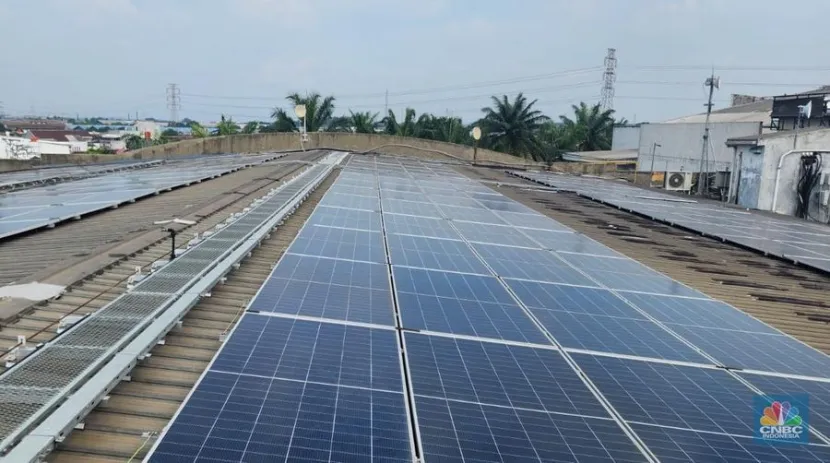
 A member of Indonesia's National Energy Council recently revealed in Jakarta that Indonesia currently has a massive production capacity of 11 GW of solar panels annually, of which approximately 5 GW comes from domestic planned capacity and the remaining 6 GW from production lines originally intended for export. However, due to the high import tariff policy imposed by the United States, Indonesia's photovoltaic product exports have been severely hindered, with a large number of products facing inventory backlog, and the local photovoltaic industry is facing severe challenges. Previously, Indonesia exported a large number of photovoltaic modules to the US and other markets every year, but now the US has imposed high tariffs of 80% to 120% on imported solar panels, effectively forming a trade barrier, causing Indonesian products to lose competitiveness in the US market and significantly cutting off export channels. The production capacity originally aimed at overseas markets has suddenly found no outlet, and the domestic market cannot quickly absorb it, directly resulting in overcapacity and high inventory levels.
She pointed out that if this situation continues, Indonesia's photovoltaic manufacturing industry will face a survival crisis, and could even trigger a chain reaction of production cuts and layoffs, impacting employment across the entire new energy industry chain. Taking the PT Trina Mas Agra Indonesia (TMAI) factory in Kendal, Central Java as an example, the company has an annual production capacity of 1 GW of solar panels, but since its launch, market absorption has been extremely poor, with products severely unsold. Currently, it relies only on the government-allocated solar photovoltaic quota project to support demand. This quota of approximately 1.5 GW has become a "dark horse" in the predicament, barely providing a limited sales channel for the company. Without policy-based procurement support, many photovoltaic factories will face greater operational pressure.
This crisis exposes the structural problem of Indonesia's photovoltaic industry's heavy reliance on overseas markets and insufficient domestic demand. Although the Indonesian government has set an ambitious target of achieving 100 GW of solar installations by 2030 and is vigorously promoting the development of domestic photovoltaic manufacturing, the industry has fallen into a passive position under the dual pressure of international trade barriers and insufficient domestic absorption capacity. Industry insiders generally believe that to resolve the current dilemma, Indonesia needs to accelerate the implementation of domestic photovoltaic projects and expand local market demand, while simultaneously exploring new export markets to reduce reliance on a single market, so that the massive photovoltaic production capacity can truly be transformed into momentum for the energy transition, avoiding idle capacity and industrial contraction.
A member of Indonesia's National Energy Council recently revealed in Jakarta that Indonesia currently has a massive production capacity of 11 GW of solar panels annually, of which approximately 5 GW comes from domestic planned capacity and the remaining 6 GW from production lines originally intended for export. However, due to the high import tariff policy imposed by the United States, Indonesia's photovoltaic product exports have been severely hindered, with a large number of products facing inventory backlog, and the local photovoltaic industry is facing severe challenges. Previously, Indonesia exported a large number of photovoltaic modules to the US and other markets every year, but now the US has imposed high tariffs of 80% to 120% on imported solar panels, effectively forming a trade barrier, causing Indonesian products to lose competitiveness in the US market and significantly cutting off export channels. The production capacity originally aimed at overseas markets has suddenly found no outlet, and the domestic market cannot quickly absorb it, directly resulting in overcapacity and high inventory levels.
She pointed out that if this situation continues, Indonesia's photovoltaic manufacturing industry will face a survival crisis, and could even trigger a chain reaction of production cuts and layoffs, impacting employment across the entire new energy industry chain. Taking the PT Trina Mas Agra Indonesia (TMAI) factory in Kendal, Central Java as an example, the company has an annual production capacity of 1 GW of solar panels, but since its launch, market absorption has been extremely poor, with products severely unsold. Currently, it relies only on the government-allocated solar photovoltaic quota project to support demand. This quota of approximately 1.5 GW has become a "dark horse" in the predicament, barely providing a limited sales channel for the company. Without policy-based procurement support, many photovoltaic factories will face greater operational pressure.
This crisis exposes the structural problem of Indonesia's photovoltaic industry's heavy reliance on overseas markets and insufficient domestic demand. Although the Indonesian government has set an ambitious target of achieving 100 GW of solar installations by 2030 and is vigorously promoting the development of domestic photovoltaic manufacturing, the industry has fallen into a passive position under the dual pressure of international trade barriers and insufficient domestic absorption capacity. Industry insiders generally believe that to resolve the current dilemma, Indonesia needs to accelerate the implementation of domestic photovoltaic projects and expand local market demand, while simultaneously exploring new export markets to reduce reliance on a single market, so that the massive photovoltaic production capacity can truly be transformed into momentum for the energy transition, avoiding idle capacity and industrial contraction.
A member of Indonesia's National Energy Council recently revealed in Jakarta that Indonesia currently has a massive production capacity of 11 GW of solar panels annually, of which approximately 5 GW comes from domestic planned capacity and the remaining 6 GW from production lines originally intended for export. However, due to the high import tariff policy imposed by the United States, Indonesia's photovoltaic product exports have been severely hindered, with a large number of products facing inventory backlog, and the local photovoltaic industry is facing severe challenges. Previously, Indonesia exported a large number of photovoltaic modules to the US and other markets every year, but now the US has imposed high tariffs of 80% to 120% on imported solar panels, effectively forming a trade barrier, causing Indonesian products to lose competitiveness in the US market and significantly cutting off export channels. The production capacity originally aimed at overseas markets has suddenly found no outlet, and the domestic market cannot quickly absorb it, directly resulting in overcapacity and high inventory levels.
She pointed out that if this situation continues, Indonesia's photovoltaic manufacturing industry will face a survival crisis, and could even trigger a chain reaction of production cuts and layoffs, impacting employment across the entire new energy industry chain. Taking the PT Trina Mas Agra Indonesia (TMAI) factory in Kendal, Central Java as an example, the company has an annual production capacity of 1 GW of solar panels, but since its launch, market absorption has been extremely poor, with products severely unsold. Currently, it relies only on the government-allocated solar photovoltaic quota project to support demand. This quota of approximately 1.5 GW has become a "dark horse" in the predicament, barely providing a limited sales channel for the company. Without policy-based procurement support, many photovoltaic factories will face greater operational pressure.
This crisis exposes the structural problem of Indonesia's photovoltaic industry's heavy reliance on overseas markets and insufficient domestic demand. Although the Indonesian government has set an ambitious target of achieving 100 GW of solar installations by 2030 and is vigorously promoting the development of domestic photovoltaic manufacturing, the industry has fallen into a passive position under the dual pressure of international trade barriers and insufficient domestic absorption capacity. Industry insiders generally believe that to resolve the current dilemma, Indonesia needs to accelerate the implementation of domestic photovoltaic projects and expand local market demand, while simultaneously exploring new export markets to reduce reliance on a single market, so that the massive photovoltaic production capacity can truly be transformed into momentum for the energy transition, avoiding idle capacity and industrial contraction.
A member of Indonesia's National Energy Council recently revealed in Jakarta that Indonesia currently has a massive production capacity of 11 GW of solar panels annually, of which approximately 5 GW comes from domestic planned capacity and the remaining 6 GW from production lines originally intended for export. However, due to the high import tariff policy imposed by the United States, Indonesia's photovoltaic product exports have been severely hindered, with a large number of products facing inventory backlog, and the local photovoltaic industry is facing severe challenges. Previously, Indonesia exported a large number of photovoltaic modules to the US and other markets every year, but now the US has imposed high tariffs of 80% to 120% on imported solar panels, effectively forming a trade barrier, causing Indonesian products to lose competitiveness in the US market and significantly cutting off export channels. The production capacity originally aimed at overseas markets has suddenly found no outlet, and the domestic market cannot quickly absorb it, directly resulting in overcapacity and high inventory levels.
She pointed out that if this situation continues, Indonesia's photovoltaic manufacturing industry will face a survival crisis, and could even trigger a chain reaction of production cuts and layoffs, impacting employment across the entire new energy industry chain. Taking the PT Trina Mas Agra Indonesia (TMAI) factory in Kendal, Central Java as an example, the company has an annual production capacity of 1 GW of solar panels, but since its launch, market absorption has been extremely poor, with products severely unsold. Currently, it relies only on the government-allocated solar photovoltaic quota project to support demand. This quota of approximately 1.5 GW has become a "dark horse" in the predicament, barely providing a limited sales channel for the company. Without policy-based procurement support, many photovoltaic factories will face greater operational pressure.
This crisis exposes the structural problem of Indonesia's photovoltaic industry's heavy reliance on overseas markets and insufficient domestic demand. Although the Indonesian government has set an ambitious target of achieving 100 GW of solar installations by 2030 and is vigorously promoting the development of domestic photovoltaic manufacturing, the industry has fallen into a passive position under the dual pressure of international trade barriers and insufficient domestic absorption capacity. Industry insiders generally believe that to resolve the current dilemma, Indonesia needs to accelerate the implementation of domestic photovoltaic projects and expand local market demand, while simultaneously exploring new export markets to reduce reliance on a single market, so that the massive photovoltaic production capacity can truly be transformed into momentum for the energy transition, avoiding idle capacity and industrial contraction.