
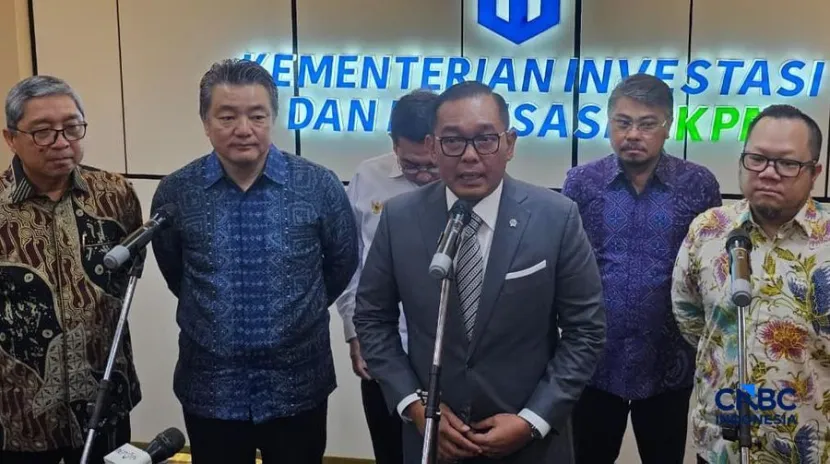
 Indonesia's Deputy Minister of Investment and Downstream Industry, who also serves as Deputy Head of BKPM, recently announced that the state-owned oil company's New and Renewable Energy subsidiary (Pertamina NRE) will cooperate with the Toyota Group to build a second-generation bioethanol production plant in Indonesia, supporting the government's mandatory green energy blending policy. The project aims to implement the National Strategic Plan, which mandates a 10% bioethanol blending ratio (E10) in gasoline by 2028 at the latest. The two parties will adopt second-generation (2G) multi-feedstock bioethanol technology, fully utilizing local resources such as oil palm biomass, corn, sorghum, etc. as raw materials for production, ensuring feedstock supply while promoting the coordinated development of agriculture and the energy industry.
Ethanol, as an important renewable blended energy source, has been incorporated into the government's long-term development plan. This cooperation between Pertamina NRE and Toyota represents a key synergy between Indonesian state-owned enterprises and global investors in building the future energy ecosystem. The cooperation has moved from preliminary discussions to the substantial implementation stage, with clear direction and measurable targets. He revealed that the cooperation actually started last year but was kept low-key, finally confirming Toyota Tsusho as the Japanese partner.
The plant site has been selected in Lampung Province, mainly due to its large-scale sugarcane, cassava, and other raw material bases suitable for ethanol production, offering significant supply chain advantages. The project also includes plans to build a sorghum planting base to provide stable raw material support for ethanol production. The initial annual production capacity is 60,000 kiloliters. Feasibility study consulting work is nearly complete, and the budget is being finalized. The investor aims to start construction in Q3 2026, with the latest start by Q4.
Toyota's Asia Regional CEO stated simultaneously that this cooperation is highly relevant to Toyota's automotive business. Ethanol fuel can be directly used in existing vehicle models, supporting the government's policy to promote low-carbon energy in the transportation sector. The Indonesian government has given full support to bioethanol development, having clearly defined the fuel ethanol blending roadmap: E5 (5% blending) implementation in 2026-2027, upgrading to E10 in 2028-2030, with a long-term target of E20. This bioethanol project will not only promote Indonesia's energy structure transformation, but also enhance energy independence and promote agricultural value addition.
Indonesia's Deputy Minister of Investment and Downstream Industry, who also serves as Deputy Head of BKPM, recently announced that the state-owned oil company's New and Renewable Energy subsidiary (Pertamina NRE) will cooperate with the Toyota Group to build a second-generation bioethanol production plant in Indonesia, supporting the government's mandatory green energy blending policy. The project aims to implement the National Strategic Plan, which mandates a 10% bioethanol blending ratio (E10) in gasoline by 2028 at the latest. The two parties will adopt second-generation (2G) multi-feedstock bioethanol technology, fully utilizing local resources such as oil palm biomass, corn, sorghum, etc. as raw materials for production, ensuring feedstock supply while promoting the coordinated development of agriculture and the energy industry.
Ethanol, as an important renewable blended energy source, has been incorporated into the government's long-term development plan. This cooperation between Pertamina NRE and Toyota represents a key synergy between Indonesian state-owned enterprises and global investors in building the future energy ecosystem. The cooperation has moved from preliminary discussions to the substantial implementation stage, with clear direction and measurable targets. He revealed that the cooperation actually started last year but was kept low-key, finally confirming Toyota Tsusho as the Japanese partner.
The plant site has been selected in Lampung Province, mainly due to its large-scale sugarcane, cassava, and other raw material bases suitable for ethanol production, offering significant supply chain advantages. The project also includes plans to build a sorghum planting base to provide stable raw material support for ethanol production. The initial annual production capacity is 60,000 kiloliters. Feasibility study consulting work is nearly complete, and the budget is being finalized. The investor aims to start construction in Q3 2026, with the latest start by Q4.
Toyota's Asia Regional CEO stated simultaneously that this cooperation is highly relevant to Toyota's automotive business. Ethanol fuel can be directly used in existing vehicle models, supporting the government's policy to promote low-carbon energy in the transportation sector. The Indonesian government has given full support to bioethanol development, having clearly defined the fuel ethanol blending roadmap: E5 (5% blending) implementation in 2026-2027, upgrading to E10 in 2028-2030, with a long-term target of E20. This bioethanol project will not only promote Indonesia's energy structure transformation, but also enhance energy independence and promote agricultural value addition.
Indonesia's Deputy Minister of Investment and Downstream Industry, who also serves as Deputy Head of BKPM, recently announced that the state-owned oil company's New and Renewable Energy subsidiary (Pertamina NRE) will cooperate with the Toyota Group to build a second-generation bioethanol production plant in Indonesia, supporting the government's mandatory green energy blending policy. The project aims to implement the National Strategic Plan, which mandates a 10% bioethanol blending ratio (E10) in gasoline by 2028 at the latest. The two parties will adopt second-generation (2G) multi-feedstock bioethanol technology, fully utilizing local resources such as oil palm biomass, corn, sorghum, etc. as raw materials for production, ensuring feedstock supply while promoting the coordinated development of agriculture and the energy industry.
Ethanol, as an important renewable blended energy source, has been incorporated into the government's long-term development plan. This cooperation between Pertamina NRE and Toyota represents a key synergy between Indonesian state-owned enterprises and global investors in building the future energy ecosystem. The cooperation has moved from preliminary discussions to the substantial implementation stage, with clear direction and measurable targets. He revealed that the cooperation actually started last year but was kept low-key, finally confirming Toyota Tsusho as the Japanese partner.
The plant site has been selected in Lampung Province, mainly due to its large-scale sugarcane, cassava, and other raw material bases suitable for ethanol production, offering significant supply chain advantages. The project also includes plans to build a sorghum planting base to provide stable raw material support for ethanol production. The initial annual production capacity is 60,000 kiloliters. Feasibility study consulting work is nearly complete, and the budget is being finalized. The investor aims to start construction in Q3 2026, with the latest start by Q4.
Toyota's Asia Regional CEO stated simultaneously that this cooperation is highly relevant to Toyota's automotive business. Ethanol fuel can be directly used in existing vehicle models, supporting the government's policy to promote low-carbon energy in the transportation sector. The Indonesian government has given full support to bioethanol development, having clearly defined the fuel ethanol blending roadmap: E5 (5% blending) implementation in 2026-2027, upgrading to E10 in 2028-2030, with a long-term target of E20. This bioethanol project will not only promote Indonesia's energy structure transformation, but also enhance energy independence and promote agricultural value addition.
Indonesia's Deputy Minister of Investment and Downstream Industry, who also serves as Deputy Head of BKPM, recently announced that the state-owned oil company's New and Renewable Energy subsidiary (Pertamina NRE) will cooperate with the Toyota Group to build a second-generation bioethanol production plant in Indonesia, supporting the government's mandatory green energy blending policy. The project aims to implement the National Strategic Plan, which mandates a 10% bioethanol blending ratio (E10) in gasoline by 2028 at the latest. The two parties will adopt second-generation (2G) multi-feedstock bioethanol technology, fully utilizing local resources such as oil palm biomass, corn, sorghum, etc. as raw materials for production, ensuring feedstock supply while promoting the coordinated development of agriculture and the energy industry.
Ethanol, as an important renewable blended energy source, has been incorporated into the government's long-term development plan. This cooperation between Pertamina NRE and Toyota represents a key synergy between Indonesian state-owned enterprises and global investors in building the future energy ecosystem. The cooperation has moved from preliminary discussions to the substantial implementation stage, with clear direction and measurable targets. He revealed that the cooperation actually started last year but was kept low-key, finally confirming Toyota Tsusho as the Japanese partner.
The plant site has been selected in Lampung Province, mainly due to its large-scale sugarcane, cassava, and other raw material bases suitable for ethanol production, offering significant supply chain advantages. The project also includes plans to build a sorghum planting base to provide stable raw material support for ethanol production. The initial annual production capacity is 60,000 kiloliters. Feasibility study consulting work is nearly complete, and the budget is being finalized. The investor aims to start construction in Q3 2026, with the latest start by Q4.
Toyota's Asia Regional CEO stated simultaneously that this cooperation is highly relevant to Toyota's automotive business. Ethanol fuel can be directly used in existing vehicle models, supporting the government's policy to promote low-carbon energy in the transportation sector. The Indonesian government has given full support to bioethanol development, having clearly defined the fuel ethanol blending roadmap: E5 (5% blending) implementation in 2026-2027, upgrading to E10 in 2028-2030, with a long-term target of E20. This bioethanol project will not only promote Indonesia's energy structure transformation, but also enhance energy independence and promote agricultural value addition.