
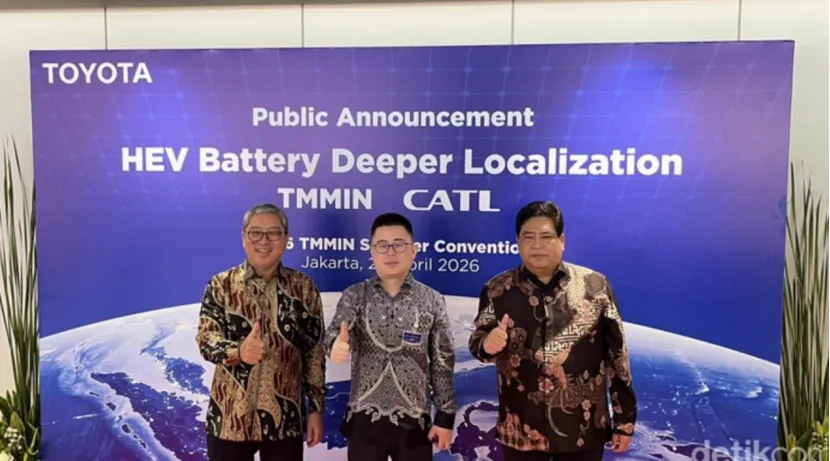
 Japanese automaker Toyota's Indonesian subsidiary recently announced a joint investment with Chinese power battery giant CATL of 1.3 trillion rupiah (equivalent to US$76 million) to advance localized battery R&D and production in Indonesia. This collaboration will accelerate Toyota's new energy industry chain in Indonesia, with plans to start battery export operations in the second half of 2026. Toyota Motor Manufacturing Indonesia stated in an official announcement that future exports will include not only battery packs for hybrid vehicles but also battery modules and cells as standalone components, though specific target export markets have not yet been disclosed.
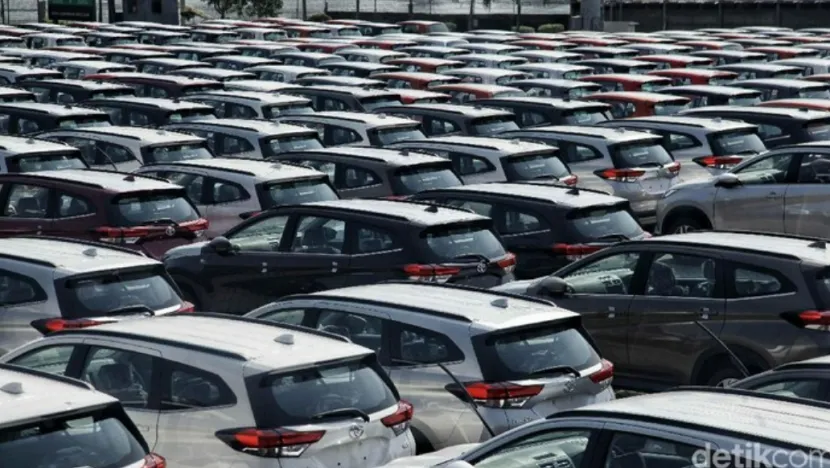
According to company executives, Toyota is currently mass-producing battery packs for hybrid models such as the Innova Zenix, Velos, and Yaris Cross at its Karawang plant. The core goal of this partnership with the world's largest battery manufacturer CATL is to significantly expand production capacity and achieve full localized manufacturing of cells, modules, and battery packs. Currently, key battery components are still imported, but production and assembly will gradually be carried out by local Indonesian workers, increasing the proportion of local manufacturing. Toyota emphasized that over its 55 years in the Indonesian market, it has invested a total of 100 trillion rupiah (equivalent to US$5.8 billion), continuously strengthening regional capacity and industrial upgrading.
Beyond the power battery sector, Toyota is also advancing diversified green energy projects in Indonesia, including plans to build a bioethanol plant in Lampung province through a joint venture with Pertamina NRE, a subsidiary of Indonesia's state energy company. The Deputy Minister of Investment revealed that the investment for the bioethanol project is estimated at US$200-300 million, though the amount is still under evaluation. The government will provide tax incentives and other supportive policies for investors. The investment shares and cooperation details will be negotiated independently by the companies, with the government only responsible for administrative approval and coordination. Construction is expected to begin by the fourth quarter of 2026, with a target to start production in 2028, aligning with Indonesia's fuel blending policy to achieve the national energy plan of adding 10% ethanol to gasoline.
Data shows that Japan's direct investment in Indonesia in 2025 was approximately US$3.1 billion. During a visit to Tokyo last month, the Indonesian President stated that Indonesia will continue to open its market and welcome Japanese companies to deeply participate in the country's industrial development. Toyota's dual-track strategy leverages CATL to fill the gap in local battery manufacturing and expand exports of new energy products in Southeast Asia, while also aligning with Indonesia's energy transition policies through bioenergy projects. This approach perfects the coordinated development of hybrids, new energy, and green fuels, further strengthening its long-term competitiveness in Indonesia and Southeast Asia's automotive and energy markets.
Japanese automaker Toyota's Indonesian subsidiary recently announced a joint investment with Chinese power battery giant CATL of 1.3 trillion rupiah (equivalent to US$76 million) to advance localized battery R&D and production in Indonesia. This collaboration will accelerate Toyota's new energy industry chain in Indonesia, with plans to start battery export operations in the second half of 2026. Toyota Motor Manufacturing Indonesia stated in an official announcement that future exports will include not only battery packs for hybrid vehicles but also battery modules and cells as standalone components, though specific target export markets have not yet been disclosed.
According to company executives, Toyota is currently mass-producing battery packs for hybrid models such as the Innova Zenix, Velos, and Yaris Cross at its Karawang plant. The core goal of this partnership with the world's largest battery manufacturer CATL is to significantly expand production capacity and achieve full localized manufacturing of cells, modules, and battery packs. Currently, key battery components are still imported, but production and assembly will gradually be carried out by local Indonesian workers, increasing the proportion of local manufacturing. Toyota emphasized that over its 55 years in the Indonesian market, it has invested a total of 100 trillion rupiah (equivalent to US$5.8 billion), continuously strengthening regional capacity and industrial upgrading.
Beyond the power battery sector, Toyota is also advancing diversified green energy projects in Indonesia, including plans to build a bioethanol plant in Lampung province through a joint venture with Pertamina NRE, a subsidiary of Indonesia's state energy company. The Deputy Minister of Investment revealed that the investment for the bioethanol project is estimated at US$200-300 million, though the amount is still under evaluation. The government will provide tax incentives and other supportive policies for investors. The investment shares and cooperation details will be negotiated independently by the companies, with the government only responsible for administrative approval and coordination. Construction is expected to begin by the fourth quarter of 2026, with a target to start production in 2028, aligning with Indonesia's fuel blending policy to achieve the national energy plan of adding 10% ethanol to gasoline.
Data shows that Japan's direct investment in Indonesia in 2025 was approximately US$3.1 billion. During a visit to Tokyo last month, the Indonesian President stated that Indonesia will continue to open its market and welcome Japanese companies to deeply participate in the country's industrial development. Toyota's dual-track strategy leverages CATL to fill the gap in local battery manufacturing and expand exports of new energy products in Southeast Asia, while also aligning with Indonesia's energy transition policies through bioenergy projects. This approach perfects the coordinated development of hybrids, new energy, and green fuels, further strengthening its long-term competitiveness in Indonesia and Southeast Asia's automotive and energy markets.
Japanese automaker Toyota's Indonesian subsidiary recently announced a joint investment with Chinese power battery giant CATL of 1.3 trillion rupiah (equivalent to US$76 million) to advance localized battery R&D and production in Indonesia. This collaboration will accelerate Toyota's new energy industry chain in Indonesia, with plans to start battery export operations in the second half of 2026. Toyota Motor Manufacturing Indonesia stated in an official announcement that future exports will include not only battery packs for hybrid vehicles but also battery modules and cells as standalone components, though specific target export markets have not yet been disclosed.
According to company executives, Toyota is currently mass-producing battery packs for hybrid models such as the Innova Zenix, Velos, and Yaris Cross at its Karawang plant. The core goal of this partnership with the world's largest battery manufacturer CATL is to significantly expand production capacity and achieve full localized manufacturing of cells, modules, and battery packs. Currently, key battery components are still imported, but production and assembly will gradually be carried out by local Indonesian workers, increasing the proportion of local manufacturing. Toyota emphasized that over its 55 years in the Indonesian market, it has invested a total of 100 trillion rupiah (equivalent to US$5.8 billion), continuously strengthening regional capacity and industrial upgrading.
Beyond the power battery sector, Toyota is also advancing diversified green energy projects in Indonesia, including plans to build a bioethanol plant in Lampung province through a joint venture with Pertamina NRE, a subsidiary of Indonesia's state energy company. The Deputy Minister of Investment revealed that the investment for the bioethanol project is estimated at US$200-300 million, though the amount is still under evaluation. The government will provide tax incentives and other supportive policies for investors. The investment shares and cooperation details will be negotiated independently by the companies, with the government only responsible for administrative approval and coordination. Construction is expected to begin by the fourth quarter of 2026, with a target to start production in 2028, aligning with Indonesia's fuel blending policy to achieve the national energy plan of adding 10% ethanol to gasoline.
Data shows that Japan's direct investment in Indonesia in 2025 was approximately US$3.1 billion. During a visit to Tokyo last month, the Indonesian President stated that Indonesia will continue to open its market and welcome Japanese companies to deeply participate in the country's industrial development. Toyota's dual-track strategy leverages CATL to fill the gap in local battery manufacturing and expand exports of new energy products in Southeast Asia, while also aligning with Indonesia's energy transition policies through bioenergy projects. This approach perfects the coordinated development of hybrids, new energy, and green fuels, further strengthening its long-term competitiveness in Indonesia and Southeast Asia's automotive and energy markets.
Japanese automaker Toyota's Indonesian subsidiary recently announced a joint investment with Chinese power battery giant CATL of 1.3 trillion rupiah (equivalent to US$76 million) to advance localized battery R&D and production in Indonesia. This collaboration will accelerate Toyota's new energy industry chain in Indonesia, with plans to start battery export operations in the second half of 2026. Toyota Motor Manufacturing Indonesia stated in an official announcement that future exports will include not only battery packs for hybrid vehicles but also battery modules and cells as standalone components, though specific target export markets have not yet been disclosed.
According to company executives, Toyota is currently mass-producing battery packs for hybrid models such as the Innova Zenix, Velos, and Yaris Cross at its Karawang plant. The core goal of this partnership with the world's largest battery manufacturer CATL is to significantly expand production capacity and achieve full localized manufacturing of cells, modules, and battery packs. Currently, key battery components are still imported, but production and assembly will gradually be carried out by local Indonesian workers, increasing the proportion of local manufacturing. Toyota emphasized that over its 55 years in the Indonesian market, it has invested a total of 100 trillion rupiah (equivalent to US$5.8 billion), continuously strengthening regional capacity and industrial upgrading.
Beyond the power battery sector, Toyota is also advancing diversified green energy projects in Indonesia, including plans to build a bioethanol plant in Lampung province through a joint venture with Pertamina NRE, a subsidiary of Indonesia's state energy company. The Deputy Minister of Investment revealed that the investment for the bioethanol project is estimated at US$200-300 million, though the amount is still under evaluation. The government will provide tax incentives and other supportive policies for investors. The investment shares and cooperation details will be negotiated independently by the companies, with the government only responsible for administrative approval and coordination. Construction is expected to begin by the fourth quarter of 2026, with a target to start production in 2028, aligning with Indonesia's fuel blending policy to achieve the national energy plan of adding 10% ethanol to gasoline.
Data shows that Japan's direct investment in Indonesia in 2025 was approximately US$3.1 billion. During a visit to Tokyo last month, the Indonesian President stated that Indonesia will continue to open its market and welcome Japanese companies to deeply participate in the country's industrial development. Toyota's dual-track strategy leverages CATL to fill the gap in local battery manufacturing and expand exports of new energy products in Southeast Asia, while also aligning with Indonesia's energy transition policies through bioenergy projects. This approach perfects the coordinated development of hybrids, new energy, and green fuels, further strengthening its long-term competitiveness in Indonesia and Southeast Asia's automotive and energy markets.