
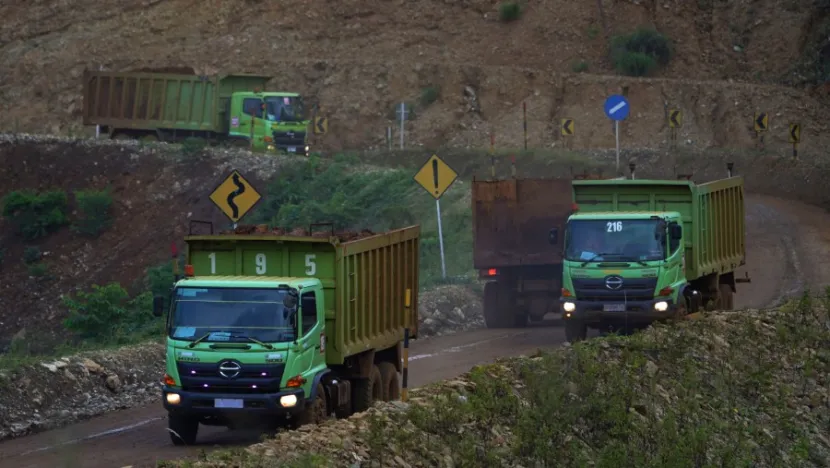
 The Ministry of Energy and Mineral Resources (ESDM) reported that as of the end of March 2026, approximately 150 nickel mining companies had obtained approval for their 2026 Mining Work Plan and Cost Budget (RKAB), with the actual number slightly higher. The Director General of Minerals and Coal at the ESDM Ministry stated that nickel mining companies that have not yet received RKAB approval can continue production under the government's relaxed policy until March 31, 2026. The Directorate General had previously issued the 2026 nickel RKAB approvals on February 10, setting the total annual nickel mining quota in the range of 260–270 million tons, a significant reduction compared to the 2025 RKAB production target of 379 million tons.
According to a circular issued by the ESDM Ministry on December 31, 2025, before the final approval of the 2026 RKAB, licensed mining companies may mine up to 25% of the planned production volume for 2026 as stated in the three-year RKAB, with this policy valid until March 31, 2026.
This relaxation applies to holders of various production-stage mining permits, including Mining Business Licenses (IUP), Special Mining Business Licenses (IUPK), Contracts of Work (KK), and Coal Mining Enterprises (PKP2B), subject to several conditions: having been approved under the 2024–2026 or 2025–2027 three-year RKAB, submitted a request to adjust the 2026 RKAB, paid the 2025 production reclamation guarantee, and if the mining area is located in a forest zone, obtained forest area use permits.
The circular clarifies that during the grace period, mine production must not exceed 25% of the planned production volume approved for 2026. Once the ESDM Ministry formally approves the annual RKAB, companies must use the new approval as the basis for mining. This significant quota reduction and accelerated approval process reflect the Indonesian government's policy direction of strict control over nickel mining scale in the context of high nickel prices and overcapacity.
The Ministry of Energy and Mineral Resources (ESDM) reported that as of the end of March 2026, approximately 150 nickel mining companies had obtained approval for their 2026 Mining Work Plan and Cost Budget (RKAB), with the actual number slightly higher. The Director General of Minerals and Coal at the ESDM Ministry stated that nickel mining companies that have not yet received RKAB approval can continue production under the government's relaxed policy until March 31, 2026. The Directorate General had previously issued the 2026 nickel RKAB approvals on February 10, setting the total annual nickel mining quota in the range of 260–270 million tons, a significant reduction compared to the 2025 RKAB production target of 379 million tons.
According to a circular issued by the ESDM Ministry on December 31, 2025, before the final approval of the 2026 RKAB, licensed mining companies may mine up to 25% of the planned production volume for 2026 as stated in the three-year RKAB, with this policy valid until March 31, 2026.
This relaxation applies to holders of various production-stage mining permits, including Mining Business Licenses (IUP), Special Mining Business Licenses (IUPK), Contracts of Work (KK), and Coal Mining Enterprises (PKP2B), subject to several conditions: having been approved under the 2024–2026 or 2025–2027 three-year RKAB, submitted a request to adjust the 2026 RKAB, paid the 2025 production reclamation guarantee, and if the mining area is located in a forest zone, obtained forest area use permits.
The circular clarifies that during the grace period, mine production must not exceed 25% of the planned production volume approved for 2026. Once the ESDM Ministry formally approves the annual RKAB, companies must use the new approval as the basis for mining. This significant quota reduction and accelerated approval process reflect the Indonesian government's policy direction of strict control over nickel mining scale in the context of high nickel prices and overcapacity.
The Ministry of Energy and Mineral Resources (ESDM) reported that as of the end of March 2026, approximately 150 nickel mining companies had obtained approval for their 2026 Mining Work Plan and Cost Budget (RKAB), with the actual number slightly higher. The Director General of Minerals and Coal at the ESDM Ministry stated that nickel mining companies that have not yet received RKAB approval can continue production under the government's relaxed policy until March 31, 2026. The Directorate General had previously issued the 2026 nickel RKAB approvals on February 10, setting the total annual nickel mining quota in the range of 260–270 million tons, a significant reduction compared to the 2025 RKAB production target of 379 million tons.
According to a circular issued by the ESDM Ministry on December 31, 2025, before the final approval of the 2026 RKAB, licensed mining companies may mine up to 25% of the planned production volume for 2026 as stated in the three-year RKAB, with this policy valid until March 31, 2026.
This relaxation applies to holders of various production-stage mining permits, including Mining Business Licenses (IUP), Special Mining Business Licenses (IUPK), Contracts of Work (KK), and Coal Mining Enterprises (PKP2B), subject to several conditions: having been approved under the 2024–2026 or 2025–2027 three-year RKAB, submitted a request to adjust the 2026 RKAB, paid the 2025 production reclamation guarantee, and if the mining area is located in a forest zone, obtained forest area use permits.
The circular clarifies that during the grace period, mine production must not exceed 25% of the planned production volume approved for 2026. Once the ESDM Ministry formally approves the annual RKAB, companies must use the new approval as the basis for mining. This significant quota reduction and accelerated approval process reflect the Indonesian government's policy direction of strict control over nickel mining scale in the context of high nickel prices and overcapacity.
The Ministry of Energy and Mineral Resources (ESDM) reported that as of the end of March 2026, approximately 150 nickel mining companies had obtained approval for their 2026 Mining Work Plan and Cost Budget (RKAB), with the actual number slightly higher. The Director General of Minerals and Coal at the ESDM Ministry stated that nickel mining companies that have not yet received RKAB approval can continue production under the government's relaxed policy until March 31, 2026. The Directorate General had previously issued the 2026 nickel RKAB approvals on February 10, setting the total annual nickel mining quota in the range of 260–270 million tons, a significant reduction compared to the 2025 RKAB production target of 379 million tons.
According to a circular issued by the ESDM Ministry on December 31, 2025, before the final approval of the 2026 RKAB, licensed mining companies may mine up to 25% of the planned production volume for 2026 as stated in the three-year RKAB, with this policy valid until March 31, 2026.
This relaxation applies to holders of various production-stage mining permits, including Mining Business Licenses (IUP), Special Mining Business Licenses (IUPK), Contracts of Work (KK), and Coal Mining Enterprises (PKP2B), subject to several conditions: having been approved under the 2024–2026 or 2025–2027 three-year RKAB, submitted a request to adjust the 2026 RKAB, paid the 2025 production reclamation guarantee, and if the mining area is located in a forest zone, obtained forest area use permits.
The circular clarifies that during the grace period, mine production must not exceed 25% of the planned production volume approved for 2026. Once the ESDM Ministry formally approves the annual RKAB, companies must use the new approval as the basis for mining. This significant quota reduction and accelerated approval process reflect the Indonesian government's policy direction of strict control over nickel mining scale in the context of high nickel prices and overcapacity.