
 Indonesia's Ministry of Trade issued two new export permit regulations on March 26, 2026, which came into effect on April 1, with a focus on streamlining export supervision requirements for key commodities such as tin, oil & gas, and coal, in order to adapt to global trade changes and reduce business burdens. The two new regulations are Trade Minister Regulation No. 5 of 2026 (amending Trade Minister Regulation No. 23 of 2023) and Trade Minister Regulation No. 6 of 2026 (amending Trade Minister Regulation No. 22 of 2023), covering adjustments to export policies and management of prohibited export goods. The Director General of Foreign Trade stated in a statement that this revision aims to simplify regulatory rules to align export policies with global trade dynamics and actual business needs.
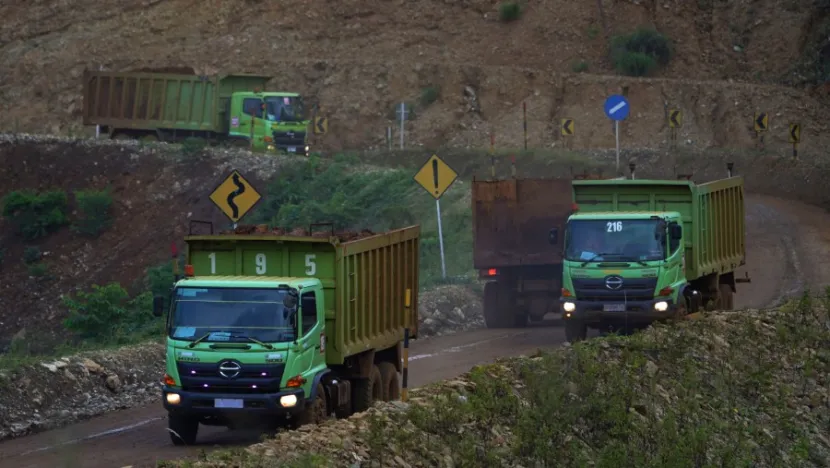
The new regulations implement export policy relaxations for energy and mineral bulk commodities, with the core being simplified export documentation requirements. For industrial tin exports, only an Export Approval (PE) and Inspection Report (LS) are required, canceling the Registered Exporter (ET) qualification requirement; in the oil & gas sector, routine exports are similarly simplified to two documents (PE and LS), with only pipeline natural gas exports retaining the registered exporter requirement. Coal export approvals have also been significantly simplified, canceling the requirement to submit a cooperation agreement in the registered exporter application, while abolishing the mandatory requirement of at least one export within two years and corresponding penalties.
To support downstream industry development, the new regulations provide greater flexibility for the source of industrial tin raw materials and remove restrictions on solder-related technical specifications, including iron content, size, weight, and packaging methods, further simplifying processes and improving operational efficiency for enterprises. In terms of management systems, the export permit system has been fully integrated with the Indonesia National Single Window (SINSW), enabling real-time verification and exchange of technical data across ministries, effectively reducing administrative barriers and accelerating customs clearance of export goods to cope with the increasingly complex global trade environment. The new regulations also achieve regulatory harmonization through unified terminology and adjusted authority for issuing export documents among ministries, which is expected to reduce policy overlap and provide clearer legal certainty for exporters.
Indonesia's Ministry of Trade issued two new export permit regulations on March 26, 2026, which came into effect on April 1, with a focus on streamlining export supervision requirements for key commodities such as tin, oil & gas, and coal, in order to adapt to global trade changes and reduce business burdens. The two new regulations are Trade Minister Regulation No. 5 of 2026 (amending Trade Minister Regulation No. 23 of 2023) and Trade Minister Regulation No. 6 of 2026 (amending Trade Minister Regulation No. 22 of 2023), covering adjustments to export policies and management of prohibited export goods. The Director General of Foreign Trade stated in a statement that this revision aims to simplify regulatory rules to align export policies with global trade dynamics and actual business needs.
The new regulations implement export policy relaxations for energy and mineral bulk commodities, with the core being simplified export documentation requirements. For industrial tin exports, only an Export Approval (PE) and Inspection Report (LS) are required, canceling the Registered Exporter (ET) qualification requirement; in the oil & gas sector, routine exports are similarly simplified to two documents (PE and LS), with only pipeline natural gas exports retaining the registered exporter requirement. Coal export approvals have also been significantly simplified, canceling the requirement to submit a cooperation agreement in the registered exporter application, while abolishing the mandatory requirement of at least one export within two years and corresponding penalties.
To support downstream industry development, the new regulations provide greater flexibility for the source of industrial tin raw materials and remove restrictions on solder-related technical specifications, including iron content, size, weight, and packaging methods, further simplifying processes and improving operational efficiency for enterprises. In terms of management systems, the export permit system has been fully integrated with the Indonesia National Single Window (SINSW), enabling real-time verification and exchange of technical data across ministries, effectively reducing administrative barriers and accelerating customs clearance of export goods to cope with the increasingly complex global trade environment. The new regulations also achieve regulatory harmonization through unified terminology and adjusted authority for issuing export documents among ministries, which is expected to reduce policy overlap and provide clearer legal certainty for exporters.
Indonesia's Ministry of Trade issued two new export permit regulations on March 26, 2026, which came into effect on April 1, with a focus on streamlining export supervision requirements for key commodities such as tin, oil & gas, and coal, in order to adapt to global trade changes and reduce business burdens. The two new regulations are Trade Minister Regulation No. 5 of 2026 (amending Trade Minister Regulation No. 23 of 2023) and Trade Minister Regulation No. 6 of 2026 (amending Trade Minister Regulation No. 22 of 2023), covering adjustments to export policies and management of prohibited export goods. The Director General of Foreign Trade stated in a statement that this revision aims to simplify regulatory rules to align export policies with global trade dynamics and actual business needs.
The new regulations implement export policy relaxations for energy and mineral bulk commodities, with the core being simplified export documentation requirements. For industrial tin exports, only an Export Approval (PE) and Inspection Report (LS) are required, canceling the Registered Exporter (ET) qualification requirement; in the oil & gas sector, routine exports are similarly simplified to two documents (PE and LS), with only pipeline natural gas exports retaining the registered exporter requirement. Coal export approvals have also been significantly simplified, canceling the requirement to submit a cooperation agreement in the registered exporter application, while abolishing the mandatory requirement of at least one export within two years and corresponding penalties.
To support downstream industry development, the new regulations provide greater flexibility for the source of industrial tin raw materials and remove restrictions on solder-related technical specifications, including iron content, size, weight, and packaging methods, further simplifying processes and improving operational efficiency for enterprises. In terms of management systems, the export permit system has been fully integrated with the Indonesia National Single Window (SINSW), enabling real-time verification and exchange of technical data across ministries, effectively reducing administrative barriers and accelerating customs clearance of export goods to cope with the increasingly complex global trade environment. The new regulations also achieve regulatory harmonization through unified terminology and adjusted authority for issuing export documents among ministries, which is expected to reduce policy overlap and provide clearer legal certainty for exporters.
Indonesia's Ministry of Trade issued two new export permit regulations on March 26, 2026, which came into effect on April 1, with a focus on streamlining export supervision requirements for key commodities such as tin, oil & gas, and coal, in order to adapt to global trade changes and reduce business burdens. The two new regulations are Trade Minister Regulation No. 5 of 2026 (amending Trade Minister Regulation No. 23 of 2023) and Trade Minister Regulation No. 6 of 2026 (amending Trade Minister Regulation No. 22 of 2023), covering adjustments to export policies and management of prohibited export goods. The Director General of Foreign Trade stated in a statement that this revision aims to simplify regulatory rules to align export policies with global trade dynamics and actual business needs.
The new regulations implement export policy relaxations for energy and mineral bulk commodities, with the core being simplified export documentation requirements. For industrial tin exports, only an Export Approval (PE) and Inspection Report (LS) are required, canceling the Registered Exporter (ET) qualification requirement; in the oil & gas sector, routine exports are similarly simplified to two documents (PE and LS), with only pipeline natural gas exports retaining the registered exporter requirement. Coal export approvals have also been significantly simplified, canceling the requirement to submit a cooperation agreement in the registered exporter application, while abolishing the mandatory requirement of at least one export within two years and corresponding penalties.
To support downstream industry development, the new regulations provide greater flexibility for the source of industrial tin raw materials and remove restrictions on solder-related technical specifications, including iron content, size, weight, and packaging methods, further simplifying processes and improving operational efficiency for enterprises. In terms of management systems, the export permit system has been fully integrated with the Indonesia National Single Window (SINSW), enabling real-time verification and exchange of technical data across ministries, effectively reducing administrative barriers and accelerating customs clearance of export goods to cope with the increasingly complex global trade environment. The new regulations also achieve regulatory harmonization through unified terminology and adjusted authority for issuing export documents among ministries, which is expected to reduce policy overlap and provide clearer legal certainty for exporters.